Help Us Achieve

2.50 Million Acts of Science

2.50 Million Acts of Science Logo
test tube data visualization
0.25 M
0.50 M
0.75 M
1.00 M
1.25 M
1.50 M
1.75 M
2.00 M
2.25 M
2.50 M
Count Starts
April 1st

Official partner of

America 250 logo

Host a Citizen Science Month Event

As part of America250 — the nationwide commemoration of the United States’ 250th anniversary — SciStarter is rallying individuals and communities to contribute 2.50 Million Acts of Science in April 2026, empowering libraries, museums, and community spaces to become hubs for meaningful citizen‑science participation.

Make an impact not only by participating in citizen science, but by bringing people together to explore and discover—host a Citizen Science Month event! Everyone is welcome to take part.

How to host and facilitate a Citizen Science Month events and program

Whether you’re starting from scratch or plugging into one of our livestreamed events, we’ve made it easy to host Citizen Science Month programs. Check out the two options below to get started:

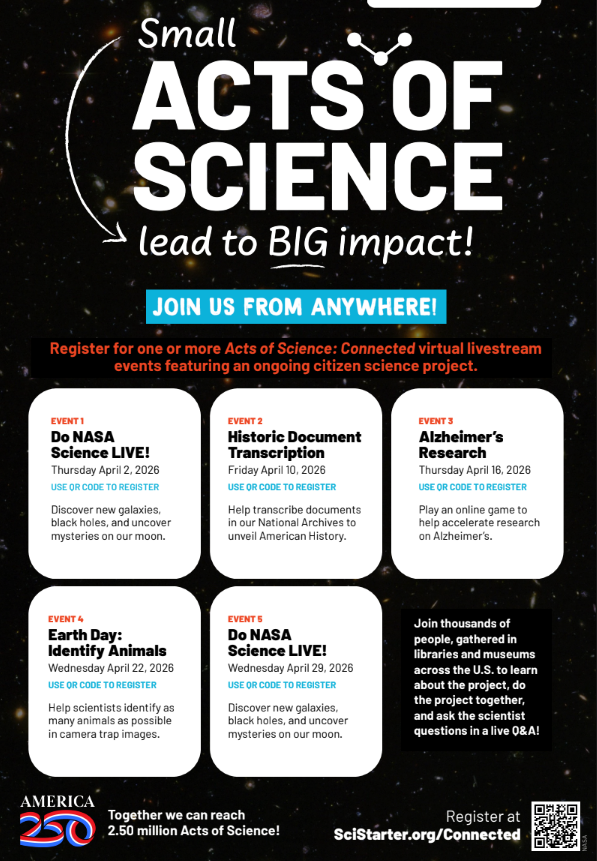
Host a SciStarter Livestream

Sign up as a satellite host for Acts of Science: Connected, a SciStarter-produced live event that lets your participants engage with real scientists and contribute to research on the spot!

Build Your Own Event/Program

Plan events using resources tailored for libraries, museums, and other community spaces. From monitoring birds to classifying galaxies, create exciting and meaningful experience for your community.

Promote Citizen Science Month

Use the Media Toolkit which includes logos, customizable templates, print-ready posters, social media guidance, and more to promote your CSM and your events.

For even more resources to bring citizen science to your library or organization—both in April and year-round—consider joining the Citizen and Community Science Library Network.

Phase 1: Learn

Goal: Get familiar with citizen science and hone your facilitations skills, so you feel ready to lead an event with confidence.

Timeline: Typically, this is done in the fall to prepare for an event during April’s Citizen Science Month, but you could do this anytime to get yourself started!

How to: Use these steps below to guide your learning. Keep in mind that this is a suggested path – it’s not required! Reach out to us (info@scistarter.org) if you have any questions!

The Steps

  1. Learn the basics (45 minutes – 1 hour):Take the Foundations of Citizen Science training module. You’ll learn what citizen science is, why it matters, and how to get involved through SciStarter.
  2. Learn how to guide others (45 minutes – 1 hour): Complete the SciStarter Ambassador training module to build skills for introducing projects to others in your community. Optional: If you work in a library, take the specialized Libraries as Community Hubs for Citizen Science module.
  3. Watch an Citizen Science Month overview (1 hour): Watch the Preparing for Citizen Science Month webinar to see examples of successful events and this year’s featured projects and events including Acts of Science: Connected! You’ll get ideas for what kind of activity might fit your community.
  4. Discover what interests your community: Find out what your community would be interested in! Do this in whatever way works for your community. You could even hold a short community listening session or send a quick survey to see what topics (like nature, space, or health) spark the most excitement.
  5. Explore and select your project: Browse project ideas and pick one or two to focus on. Here are some places to start!
Tip: Try your chosen project yourself so you can better support participants later.

Phase 2: Plan & Promote

Goal: Create and share your plan for a Citizen Science Month event that fits your community’s interests and resources.

Timeline: This phase usually happens in winter and early spring as you prepare for an April event. You can also follow these steps anytime you’re planning a citizen science program.

How to Use: Follow these steps to organize and promote your event. This is a suggested path, not a strict checklist. Use what fits your timeline and community. Reach out to us if you need help along the way!

Suggested resources are linked throughout the steps, but you can find them all in our Google Drive!

The Steps

  1. Choose your event format: Decide what kind of program works best for your community. Here are some program formats:

Tip: Keep it simple your first time. Even one short activity can spark interest and participation.

  1. Plan your event details: Use the Program Planning Tool or your own system to outline: Date and location, audience and partners, supplies, setup, and how participants will record their contributions on SciStarter. If you’re using an Event Recipe Card (like Globe at Night, Stall Catchers, or iNaturalist), note any prep work you’ll need to do ahead of time. Here are some guides:
  1. Register your event: Go to SciStarter.org/add-event to make your event official. When you register, it becomes part of Citizen Science Month 2026, searchable in the SciStarter event database, and eligible for SciStarter promotion! (If your event is private, mark it as “not open to the public” in the form.)
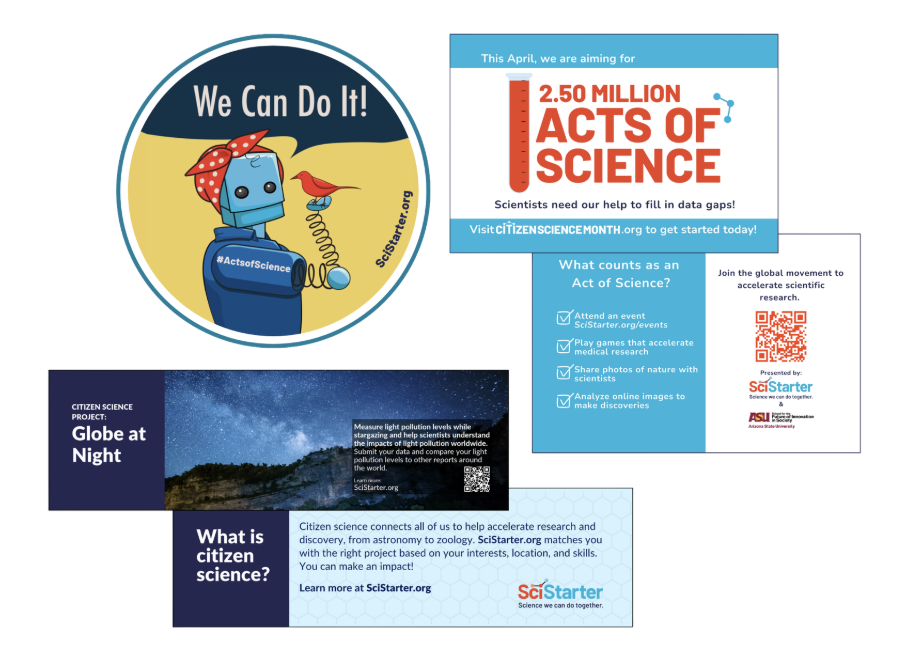
  1. Spread the Word: Use the Media Toolkit to promote your event with ready-to-use materials like social media images, sample posts, and a press release. You can also make your own promo materials using Promo Photos and Social Media Assets to show what citizen science looks like in action. SciStarter has a ton of resources for you:

Libraries: Each Citizen Science Kit has its own kit-specific promotional materials on the Build-a-Kit page! You can also find more library-specific resources for planning and promoting here.

Phase 3: Act & Celebrate

Goal: Host your event, guide your community through citizen science activities, and celebrate the impact you’ve made together.

Timeline: This phase happens during April’s Citizen Science Month, when communities everywhere are taking part. You can adapt the same steps for events anytime of year.

How to Use: Follow these steps to carry out your event, collect your “Acts of Science,” and wrap up with simple ways to share and celebrate your success.

The Steps

  1. Confirm your event details : Double-check your event plan before launch day.
  • Confirm your date, location, and project links.
  • Test any tech (projector, Wi-Fi, slides, or livestream).
  • Gather printed materials or signage.
  • If hosting an Acts of Science: Connected Livestream, log in early to ensure your setup works smoothly.
  1. Lead your event (time varies by format): Here you get to use the facilitation guide, recipe card, or whatever plan you made for your event (see Plan & Promote Phase)! During your event, welcome participants and explain how their contributions help real research. And don’t forget to snap a few photos for social media or a recap later!
  1. [REQUIRED] Report your Acts of Science: After your event, go to SciStarter.org/go/report and submit your attendance numbers and estimated Acts of Science completed. This helps track national impact and ensures your community’s contributions count toward Citizen Science Month totals.
  1. Celebrate your community: Thank your participants and share what they accomplished! You can do this several ways – Post a short recap or photo on social media with #CitizenScienceMonth and #ActsofScience, offer certificates or bookmarks as keepsakes, display results, stories, or photos in your space or newsletter. You could even host a short “what we discovered” showcase in May or during a community event to keep the momentum going! Speaking of which…
  1. Keep the curiosity going: Help participants stay involved beyond April by sharing ongoing opportunities like inviting them to create a SciStarter account for updates and future projects, exploring projects with civic engagement extensions, or even reading citizen science inspired books!

And if you’re a library, check out our partnership with the Collaborative Summer Library Program for ways to connect citizen science to summer reading.

  1. Reflect and plan ahead: Take a few minutes to jot down what worked well and what you’d change next time. Use your notes to prepare for next year’s Citizen Science Month or implement citizen science year round!

🎉 Congratulations! 🎉
You’ve brought science to life in your community and helped people see that discovery is something we can all take part in and share. Whether your event was big or small, your efforts added to a national movement of learning, connection, and curiosity!

What’s Involved?

View this webinar recording and slides to see what’s involved in hosting an event and hear tips from others.

Will You Be a Part of Citizen Science Month?

Complete the Citizen Science Month Pledge for Facilitators/Event Hosts to share how you anticipate being a part of this month-long celebration!


Trainings

Complete these free, self-guided, interactive trainings to learn the basics of citizen science and best practices for introducing participatory/citizen science in your community.

Foundations of Citizen Science training module

Learn the basics, discover why participation in scientific research matters, participate in projects, and make the most of SciStarter.

SciStarter Ambassador training module

Learn how to introduce citizen science to others in your community!

Libraries! There’s even a training made just for you: Libraries as Community Hubs for Citizen Science.


Additional Resources

Looking for ways to connect your community to citizen science?

We have a range of project and event ideas and resources below!

Is your community interested in a particular topic, such as gardening or astronomy, health or the environment? Find related Featured Projects or browse Event Recipe Cards with step-by-step project instructions, tips to discuss the project’s scientific goals, and suggested follow-on activities to sustain engagement and to follow the project’s progress and outcomes. Find these and other resources, below.

Activities are designed for a range of ages and experiences.

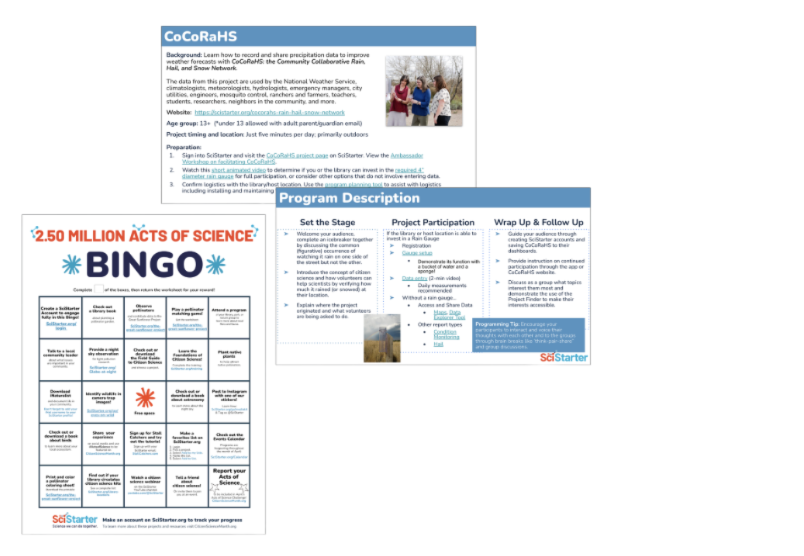
screenshot of the google doc template of a program planning tool
Program Planning Tool

This document will help you organize event elements to meet your community’s needs.

Event Recipe Cards

Visit our Google Drive to explore all of our Event Recipe Cards.


Event Recipe Cards

Plan your event in minutes! Choose a project that aligns with your community’s interests (and your capacity!).

Event Recipe Cards

Visit our Google Drive to explore all of our Event Recipe Cards


Note: This year’s focus is on outcomes

What happens to all the data people collect or analyze? What are the scientific or societal outcomes? What have volunteers learned? How is the field of participatory science evolving?

Explore outcomes in multiple ways:

  • Browse data visualizations on project websites with open data policies.
  • Read blog posts and journal articles from project teams.
  • Connect with project leaders via the “Message Project” button on SciStarter project pages.
  • Need assistance? Reach out to the SciStarter Team for help finding outcomes to share.
FInd A Project

CitSciMonth 2026 Featured Projects

See projects that we are focusing on in April 2026.

Project Finder

Use our project finder to find the perfect project. Search by location, topic, and more!

Projects by Grade Level

Explore projects with classroom materials, organized by suggested grade level.

Projects for Civic Engagement

View curated lists that include follow on civic engagement activities.

Event Checklist

Ensure your event is set for success with our checklist designed for Citizen Science Month.

Foundations of Citizen Science Training Slides and Facilitator Guide

Facilitate an introduction to citizen science with these slides or download to customize.

Additional Resources

Now that you’re up to speed on citizen science and have started to plan your April event, it’s time to register your event on SciStarter.org/add-event. This will ensure it is officially part of Citizen Science Month 2026!

Events will be searchable in the SciStarter event database and promoted by SciStarter. If your event is not open to the public, simply note “this event is not open to the public” in the event description when you register.

This folder contains links to customizable promotional materials, including a social media toolkit, press release, images, and posters and more to promote your event.

Media Toolkit

Social media assets, images, a press release template and more.

Flyers and Posters

Promote participation through informative postcards and flyers. There are blank posters (pictured to the left) to add in your own event info, evergreen posters for anytime, and Canva templates.

Make it Count!

Well done! Now it’s time to make it all count! Report Acts of Science, attendance numbers and estimated contributions to projects, by May 5, 2026. Your event name and organization will be displayed on the Acts of Science Wall of Fame (your reported number of Acts will not be displayed).

We’re aiming for 2.50 MILLION and every Act counts!

Report Your Acts

Help Citizen Science Month reach its goal by reporting the science you or your participants do!

Take Our Survey

Help us measure the success of Citizen Science Month and One Million Acts of Science