PROJECT
Soil Quest
Explore Soil Health in Raleigh, NC
Overview
This is a citizen science project led by Dr. María (Mery) Touceda-Suárez and Dr. Stephanie Mathews at North Carolina State University. We are interested in characterizing the urban soil of Raleigh, North Carolina.
Essentially we want to take a performance review of our urban soils. Cities like Raleigh place unique demands on soil. Urban soils get compacted by foot traffic and construction, mixed with debris and fill materials, sealed under pavement, and exposed to pollutants, all while being asked to support trees, gardens, stormwater drainage, and urban green spaces. By understanding soil quality we will learn how well it supports the environment which is often related to how well it can grow plants.
If our soil is healthy, it supports life around it including microbes, plants, animals and humans. Healthy soil can recycle nutrients and is protected from erosion, nutrient depletion and a loss of organic matter.
In an urban setting, healthy soil also helps manage flooding, cool neighborhoods, and improve air quality, benefits that matter deeply in a growing city. Soil health impacts you!
Thank you for being our eyes, ears, and hands in this effort.
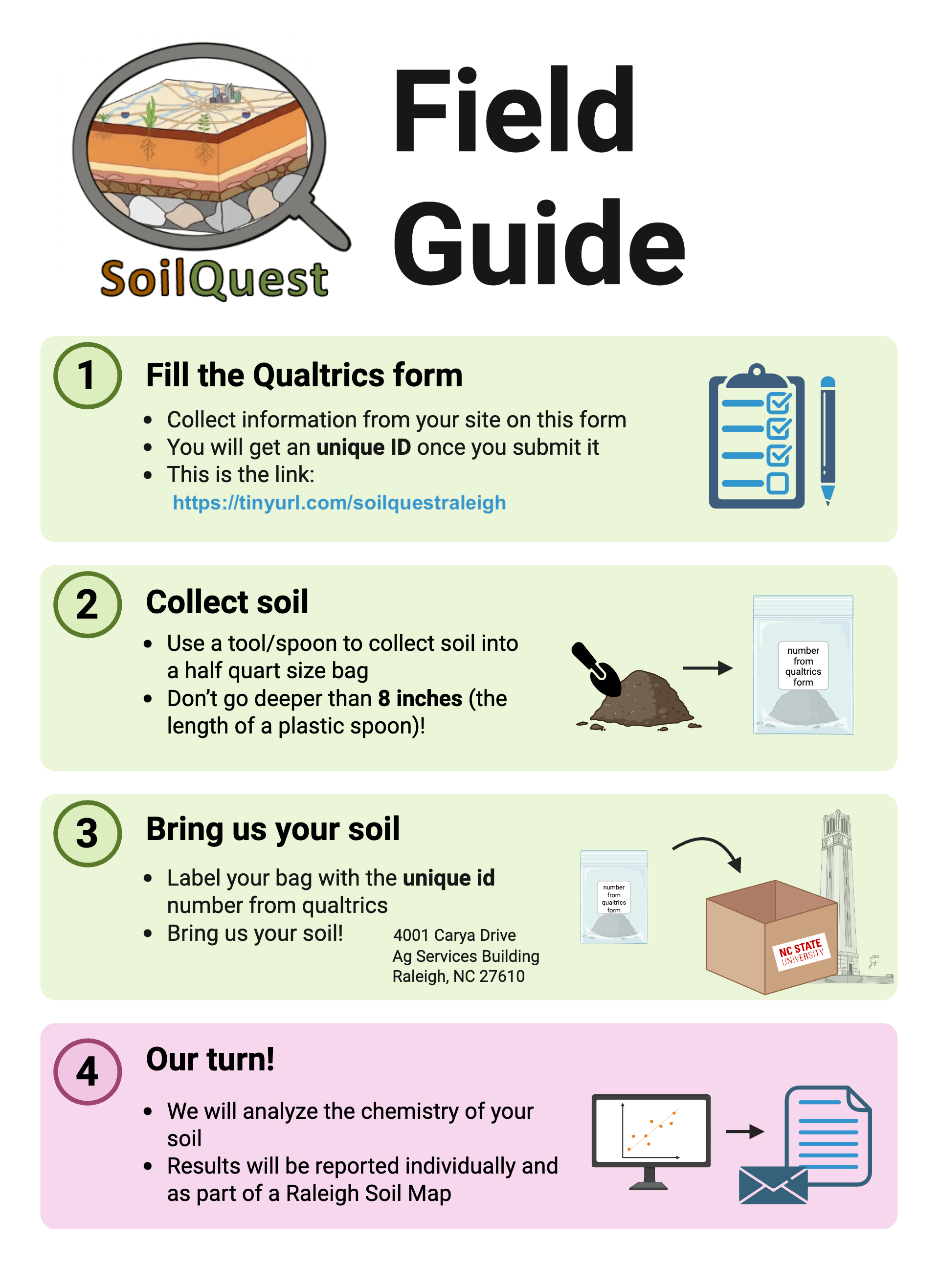
Materials Needed
Steps
- Pick a soil collection site in Raleigh, North Carolina
- Collect information about your site on this form: https://tinyurl.com/soilquestraleigh
- Be sure to save your unique ID!
- Be sure to save your unique ID!
- Collect Soil: Use a plastic spoon (or similar tool) to collect 1/2 of a quart size bag of soil.
- Don’t go deeper than 8 inches
- Follow the soil typing instructions to complete the form.
- Submit your soil. Label the sample collection bag with your unique ID and bring it to a drop-off location. Look for the Soil Quest logo.
- Drop off locations:
- 4001 Carya Drive, Ag Services Building, Raleigh NC 27610
- 112 Derieux Place, Thomas Hall Raleigh, NC 27695-7614
- Drop off locations:
Materials Needed

Goals of the Project
We want to determine the quality and health of the urban soils in North Carolina. Urban soils face distinct challenges compared to natural or agricultural soils: years of development, land-use changes, and human activity leave behind a complex and often degraded soil landscape. Healthy soil should support life around it including microbes, plants, animals and humans. Healthy soil can recycle nutrients and is protected from erosion, nutrient depletion and a loss of organic matter.
We will do this by determining the soil characteristics which reflect the soil’s potential for supporting ecosystem services such as microbial life, plant growth, and water conductivity. In an urban context, these services are especially critical, since city soils must filter stormwater, support street trees and green spaces, and buffer neighborhoods against heat and flooding, all while bearing the pressures of a growing metropolitan area.
The characteristics include soil type, Organic Carbon and Nitrogen, pH and micronutrient content.
As the city of Raleigh continues to grow and develop, it is important to relay this information to city officials and planners so that future development decisions can protect and restore soil function where it matters most.
Soil quality: The fitness of a specific soil to function within its ecosystem, often evaluated based on its capacity for production. Essentially, we want to take a performance review of your soil. When we measure soil quality we want to know how well it supports the environment which is often related to how well it can grow plants.
Soil health: the continued capacity of soil to function as a vital living ecosystem that sustains plants, animals, and humans. With a focus on its ability to self-regulate, sustain life, and resist degradation.
Frequently Asked Questions
Everyone who is interested in helping with this research is welcome to participate!
Not at all. Soil should be collected from Raleigh, North Carolina. You should be sure you have permission to collect soil from this location if it is private property that you do not own.
Yes! Thank you for being a dedicated soil quester. Please only submit one sample per site.
We recommend selecting a different sampling site as it will be difficult to type this soil. Soil with large debris will also not be submitted for soil analysis testing.
To receive information about the organic C and N, pH and micronutrients, you must submit your soil sample. However, if you forget to submit a sample and still completely fill out the form, we may be able to use this information on the interactive map and gain a better understanding of the Raleigh Urban Soil.
You will receive an email with your survey responses after completing the form that will contain your unique ID. If you deleted this email and still need help, contact soilquestraleigh@ncsu.edu.
We are asking that you submit your name, email, and phone number on the form. This is used to relay your soil testing results back to you. This information will not be shared publicly. If you have any concerns, please contact soilquestraleigh@ncsu.edu.
This research is conducted by researchers at North Carolina State University.
updateS
This page provides ongoing information about the progress of the citizen science project including research activities and updates on data collection.
Soil Quest Raleigh Launched
Thank you to Deanna Bigio and feedback from the Wake County Master Gardeners. We are now up and running. You can now submit soil samples.
Our Team
This project is supported by:
Meet the Researchers
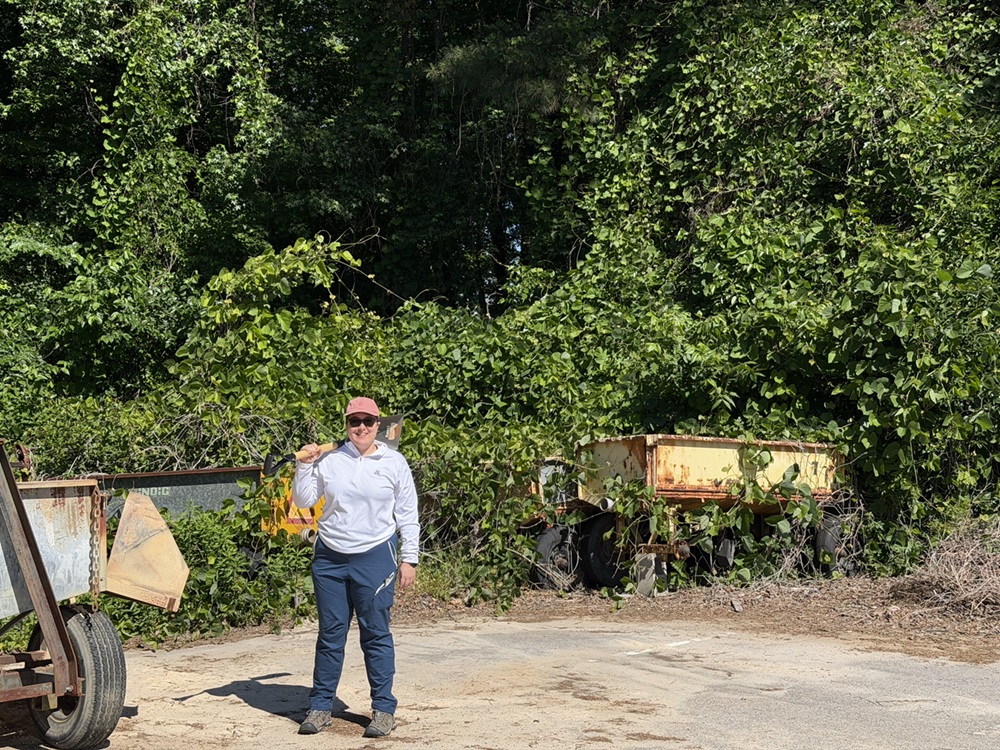
Dr. María (Mery) Touceda-Suárez
Dr. Touceda-Suárez is a postdoc focused on environmental viromics and working on the optimization of bioinformatics pipelines for viral detection. Her research interests include: unknown fractions of microbial communities, environmental microbiology, urbanization and climate change, and sustainability. When not in the lab you can find Mery behind a book, in the swimming pool, or attending her balcony vegetable garden.
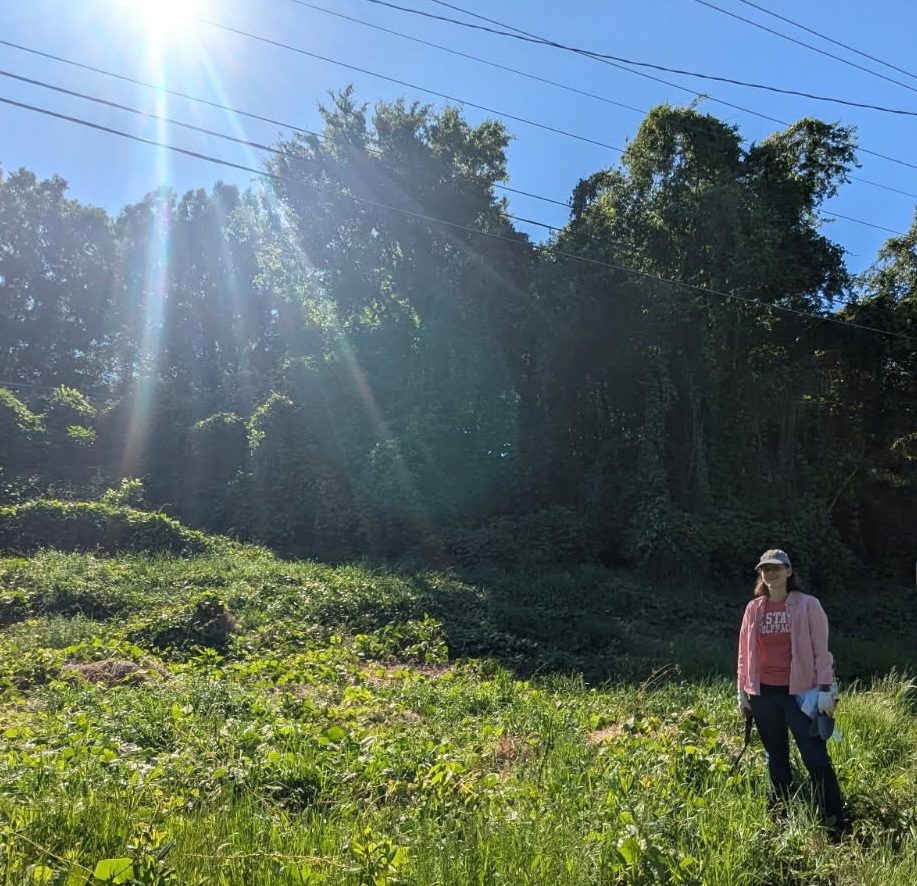
Dr. Stephanie Mathews
Dr. Mathews is an associate teaching professor in the department of biological sciences at North Carolina State University. She works with undergraduate students to isolate bacteria and bacteriophage from soil in the courses she teaches. Dr. Mathews is excited to engage the broader community in understanding the value of our soil.