


Return to Connected Events / Comets, Clues, and Our Cosmic Story
Comets, Clues, and Our Cosmic Story
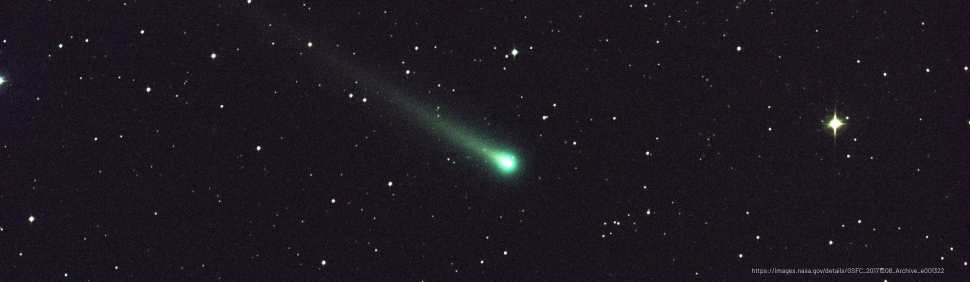
Meet the scientists behind Rubin Comet Catchers, a NASA-supported project, and learn how to find active comets in our solar system to tell us more about the history of the cosmos.
Welcome hosts and facilitators!
We’re so glad you’re hosting an in-person gathering to stream the Acts of Science: Connected virtual event, Comets, Clues, and Our Cosmic Story featuring the NASA-supported citizen science project Rubin Comet Catchers.
LIVE Event
Two options on April 29, 2026:
6 PM ET
9 PM ET
Event Duration: 2 hours
As a host, you must register for this event to receive the Zoom link to join. Your guests do not need to register independently.
This is a signature event of Citizen Science Month 2026, and all activity counts towards a collective goal of 2.50 Million Acts of Science before the end of April. Report your Acts of Science, which includes event attendance and estimated Rubin Comet Catchers classifications, to CitizenScienceMonth.org!
In addition to being a signature Citizen Science Month event, Comets, Clues, and Our Cosmic Story is also a Do NASA Science LIVE! event, which is a year-round series. Learn more about the series here.
The below toolkit is designed to orient you to the project and help you prepare to host a successful in-person event in your space.
Welcome from the Project Leader

Project SCientist
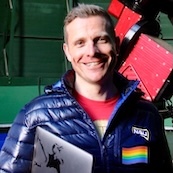
Colin Chandler
Research Scientist
Project Description
The project Rubin Comet Catchers invites participants to help find new comets and explore small, icy objects in our solar system using images from the new Vera C. Rubin Observatory in Chile. By looking at these pictures, volunteers can spot comets that have never been seen before. Every discovery helps scientists learn how comets form, how the solar system has changed over time, and where icy regions that could support life might be.
Participants will learn how to recognize comet tails and fuzzy comae, and how to label objects so the Rubin Comet Catchers team can study them. Comets are leftover ice from the birth of the solar system, and studying them helps answer big questions: How did Earth get its water? What was the early solar system like? How do icy objects move and change far from the Sun?
You can learn how to participate in the project alongside your audience, or explore it ahead of time if you’d like. Learn more about the project here.
Technology Needed to Host This Event
This event is a livestream through Zoom. Participants gathered in-person at your site will watch and listen together live while joining the activity on their own devices (phones, tablets, or laptops).
To fully participate, please plan for the following:
- A computer (laptop or desktop)
- Used to log into Zoom and share the livestream with the group
- Reliable internet connection (wired is best, if available)
- Large display for group viewing
- A projector and screen or a large TV/monitor
- HDMI (or appropriate) cable to connect the computer to the display
- Sound for the room
- External speakers, TV speakers, or a projector with built-in audio
- Sounds should be loud enough for the whole room, test with audience upon the start of the event
- Participant Devices
- Notify your guests ahead of time if they need to bring their own device or if you will supply them
- Ensure your guests have access to the Wi-Fi at the host location
- Use our printable instructions to help your audience set up their accounts to participate before or during the event
Strongly Recommended: A stable internet connection is important for a smooth experience. If possible, avoid public or heavily restricted Wi-Fi. We recommend testing Zoom audio and video on your computer before the event to be sure everything looks and sounds good.
Facilitation Support
- Create a Free SciStarter Account: SciStarter.org/login. For participants under 13, an adult should set up a family account.
- Sign up for Zooniverse at Zooniverse.org.
- Return to SciStarter.org and click the dropdown icon next to your profile name and select “My Info & Settings” to visit your SciStarter Dashboard.
- Add your Zooniverse username to the “affiliate integration” box to start tracking contributions.
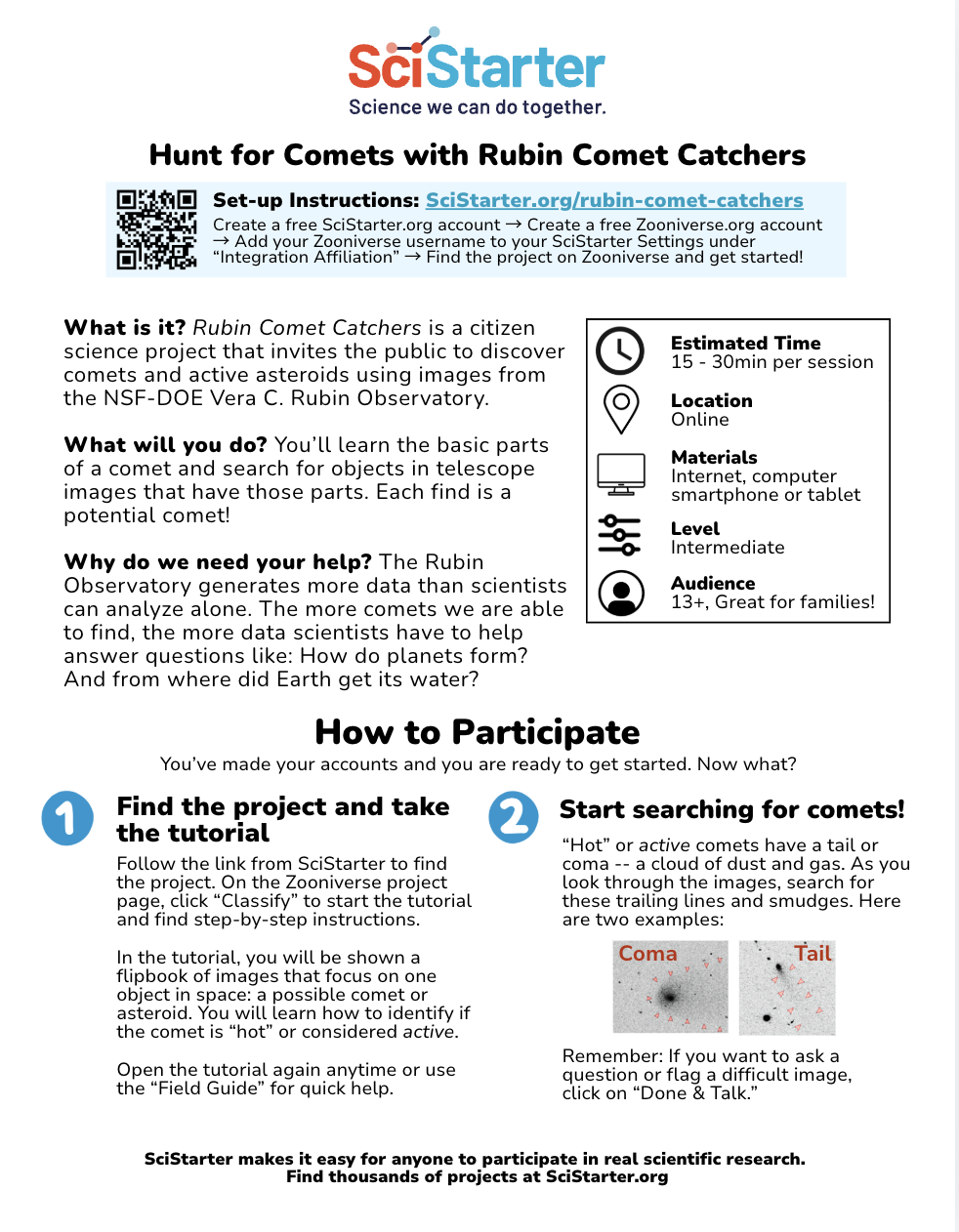
- Visit the Rubin Comet Catchers page on Zooniverse to get started on a workflow. Before you work on real data, make sure to look through the brief tutorial.
- Start searching for comets! Classify for as long as you’d like.
Print and distribute the instructions for your guests.
Reminder: You don’t need to be a subject matter expert or have all the answers.
Your role is to help participants feel welcome, supported, and engaged. The SciStarter team and the featured project’s scientist are available to help answer questions and provide accurate information when needed.
If someone shares misinformation
You can acknowledge the comment with something like, “There’s a lot of information out there, and it can be confusing,” or by simply thanking them for sharing. Then, in a friendly way, guide the conversation back to the activity.
If someone has a strong or disruptive opinion
Before the event, align with your event staff or partners on how to handle interruptions. If a strong opinion begins to disrupt the program, pause calmly, acknowledge the comment, and loop in staff so the group can stay focused and everyone can participate.
If you’re asked a question you can’t answer
It’s perfectly fine to say, “I’m not sure, but I can help find out.” For questions about the project’s science or data procedures, submit the question to the project’s Q&A or support channel so the right experts can respond.
If you notice obviously erroneous data being submitted
Remember that data quality is not your responsibility – each project has systems in place to weed out less than perfect contributions. If you suspect the error is genuine, encourage the participant to revisit the training materials or Field Guide. If you suspect the error is intentional, gently remind the participant that their work is being submitted to a team of real people, who often interact with participants. This is a place to put your best effort forward.
The Rubin Observatory provides educational “investigations” to bring Rubin data into the classroom. Learn more about the resources available here.
Promotional Resources
Use these resources to promote your in-person event. See all promotional tools in this google folder.
Posters
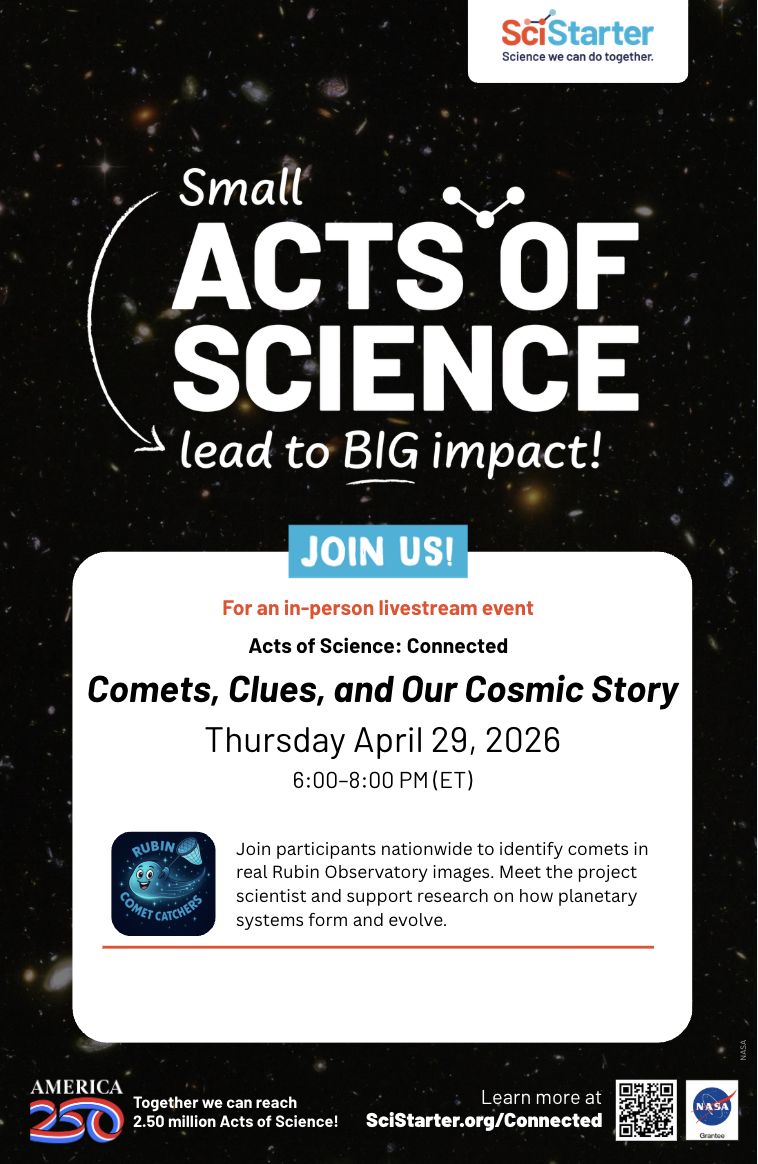
Available in multiple time zones.
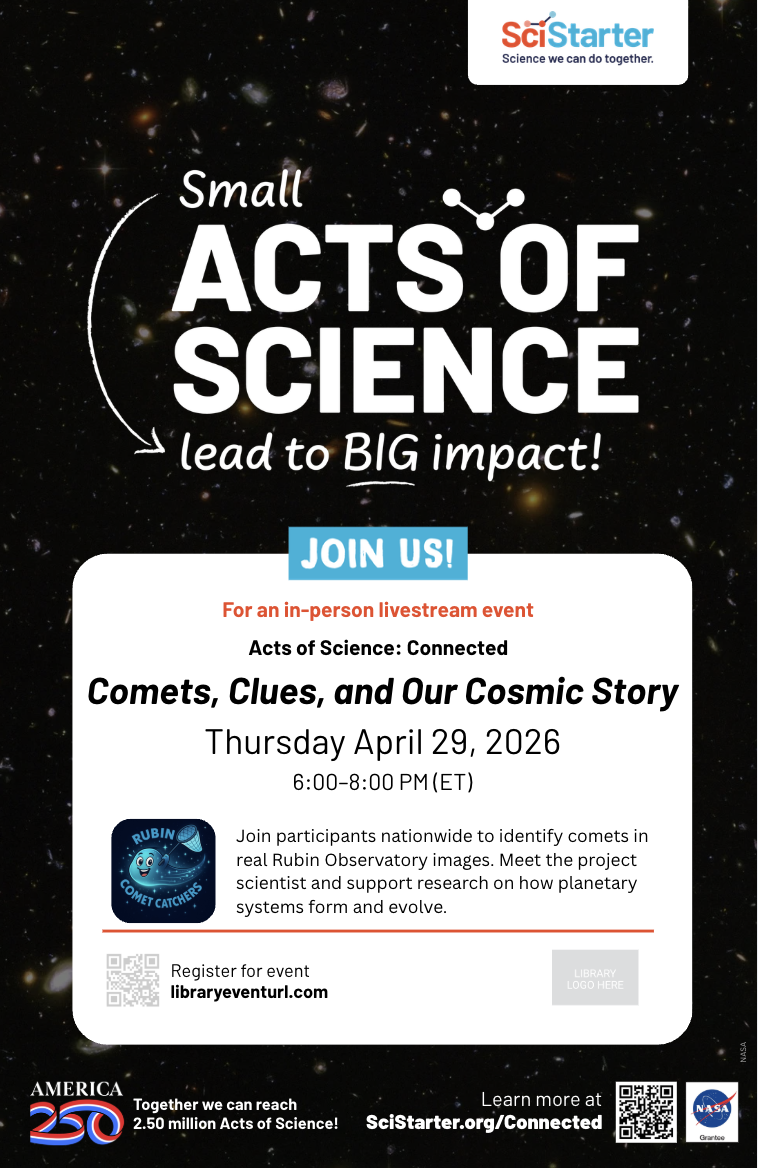
Click here for Canva instructions.
Social Media and Graphics


Keep It Going
Print and distribute this flyer so your guests can continue participating in this project from home.
Thank You!
Thank you for facilitating this event and supporting the citizen science project Rubin Comet Catchers. Your participation helps scientists explore the origins of water on Earth and uncover the early history of our solar system.
By guiding participants through this project, you’re helping scientists speed up the process of discovery, while giving your community a chance to contribute to real, ongoing research. Your time, curiosity, and leadership make these discoveries possible.
We’re grateful for your partnership and for the role you play in planetary science—one image at a time.
Please take a moment to complete our brief post-event feedback survey. Your response should take less than 5 minutes.

All activity in April, Citizen Science Month 2026, counts towards a collective goal of 2.50 Million Acts of Science. Report your Acts of Science, which includes event attendance and estimated Rubin Comet Catchers classifications, to CitizenScienceMonth.org!