Bring Citizen Science Month To Your Community
Host an Acts of Science Experience
Any project. Any format. Every event counts.
Hosting an event during Citizen Science Month helps more people participate in real scientific research and contribute to the shared goal of 5 million Acts of Science during April 2027! Libraries, museums, schools, Girl Scouts, educators, community organizations, and partners host events of all kinds throughout April. Events can be small or large, in-person or virtual, one-time or ongoing.
Make an impact not only by participating in citizen science, but by bringing people together to explore and discover—host a Citizen Science Month event! Everyone is welcome to take part.
No prior experience is required. SciStarter provides the guidance, tools, and support you need to plan a successful event. But first, get to know citizen science!
Planning an event or program?
Download posters, flyers, guides, takeaways, and more.

What Kind of Event Are You Planning?
Choose the option that best fits your plans. You can mix and match resources.
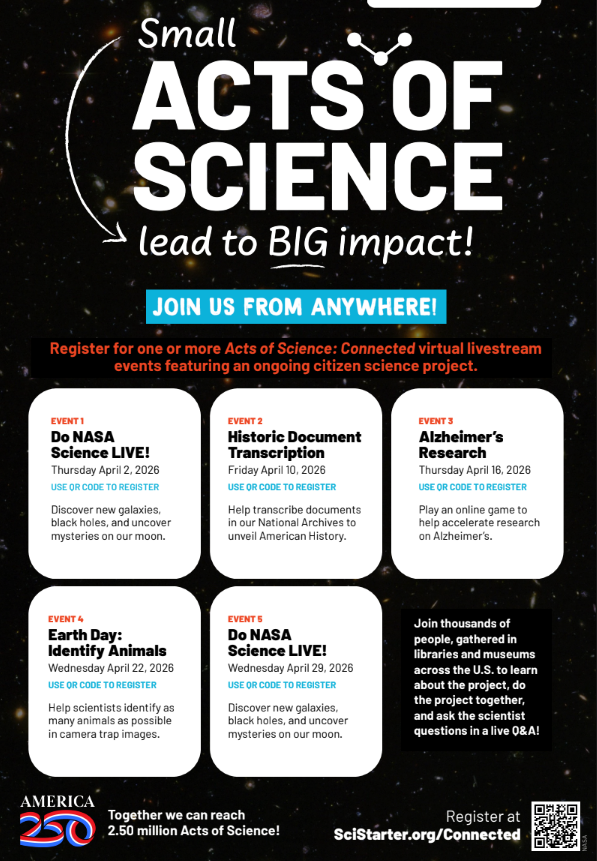
Option 1: Acts of Science: Connected
Join us LIVE!
A featured live virtual event series that hosts stream into their in-person gatherings. Communities participate together in real time, guided by project scientists. Ideal for a turnkey, scheduled experience with step-by-step support.
What you provide: Space and community invitation.
What we provide: Virtual event, facilitation and promotional materials.
Easy to host. Minimal preparation.
Option 2: Any Citizen Science Event
Build your Own!
Feature any citizen science project or activity. Examples include displays, outdoor data collection, indoor project demonstrations, introducing citizen science and more. Customize to your audience!
What you provide: Space, activity, and participants.
What we provide: Planning resources and print-ready promotional tools.
Any project. Any format.
Option 3: Help Promote Citizen Science Month
Anyone can help!
You don’t need to host an event to be involved! Share posters and flyers, repost #ActsofScience and @SciStarter, or support local and virtual programs throughout April.
What you provide:
Time, energy, and amplification through your networks.
What we provide: Posters, flyers, media assets, and social media guidance.
Help make citizen science visible!
Whether you host a Connected event or another citizen science activity, your event helps people do Acts of Science.
Making it Count, Prizes, and the Wall of Fame
Host-led events play a key role in reaching millions of Acts of Science:
- Registering your event counts as an Act of Science!
- Participation in SciStarter Affiliate projects is tracked automatically if you and your attendees follow all project page instructions.
- Coming soon: Hosts and participants can report Acts manually using the Report Acts tab, this includes attendance and estimated Acts of Science. You do not need an account on SciStarter to use the Report tool.
- All social media posts using #ActsofScience to spread the word will count.
Social Media posts may appear on the Wall of Fame, and participants who report Acts may be eligible for prizes and recognition.
Resource Roundup
- Learn the basics (45 minutes): Take the Foundations of Citizen Science training module. You’ll learn what citizen science is, why it matters, and how to get involved through SciStarter.
- Learn how to guide others (45 minutes): Complete the SciStarter Ambassador training module to build skills for introducing projects to others in your community. Optional: If you work in a library, take the specialized Libraries as Community Hubs for Citizen Science module.
- Watch a Citizen Science Month overview (1 hour): Watch the Preparing for Citizen Science Month webinar to see examples of successful events and this year’s featured projects and events including Acts of Science: Connected! You’ll get ideas for what kind of activity might fit your community.
- Join an info session or watch a recording for Acts of Science: Connected to learn more about our signature event series this April.
- Discover what interests your community: Find out what your community would be interested in! Do this in whatever way works for your community. You could even hold a short community listening session or send a quick survey to see what topics (like nature, space, or health) spark the most excitement.
- Explore and select your project: Browse project ideas and pick one or two to focus on. Here are some places to start!
Tip: Try your chosen project yourself so you can better support participants later.
These resources are designed to help you introduce citizen science and integrate the project of your choice into a custom event. Looking for ready-to-use, plug-and-play programs? For Acts of Science: Connected—SciStarter’s Signature Series for Citizen Science Month 2026—visit the Acts of Science: Connected homepage for event hosts and facilitators.
Planning Tools
Facilitation Guides
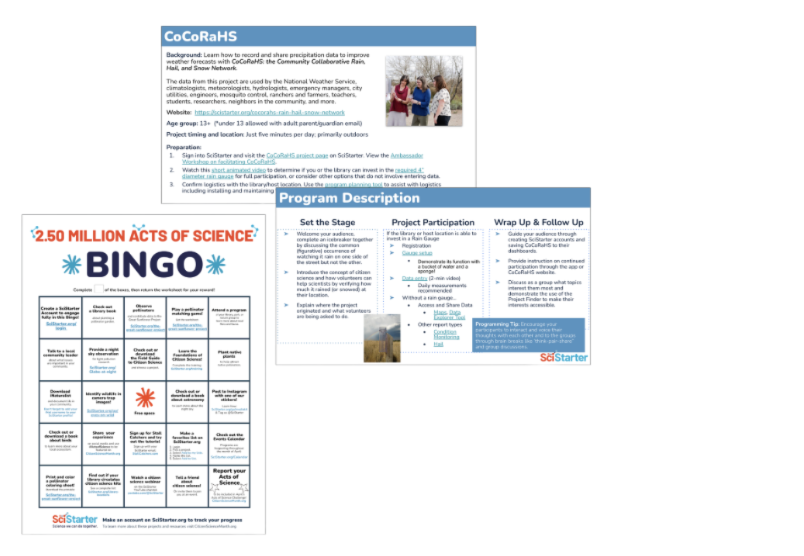
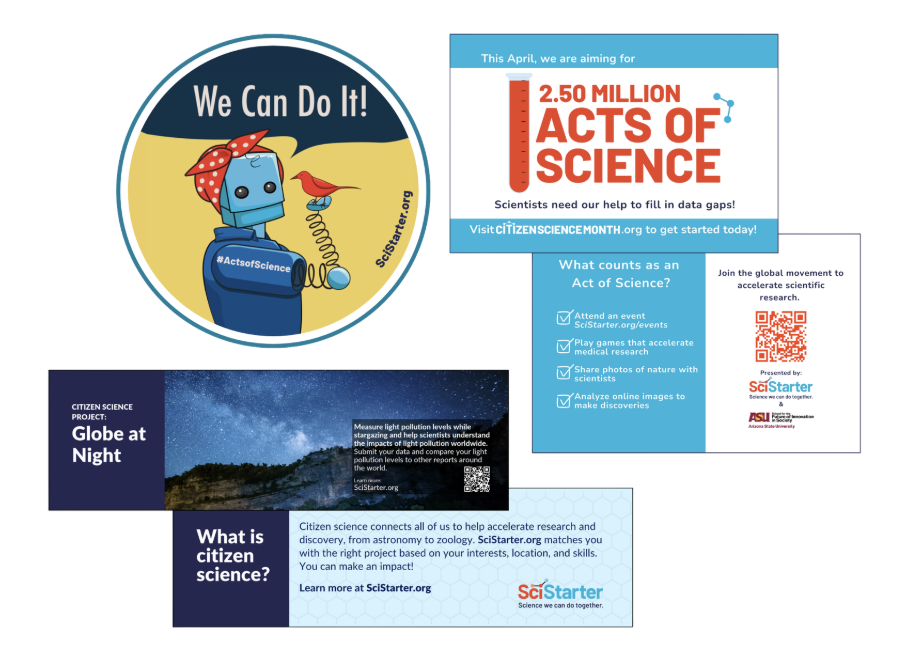
Libraries: Each Citizen Science Kit has its own kit-specific promotional materials on the Build-a-Kit page! You can also find more library-specific resources for planning and promoting here.
Get Assistance From Trained Volunteers
SciStarter Ambassadors help support Citizen Science Month events by:
- Assisting with facilitation
- Welcoming participants
- Answering questions
- Helping promote events
Visit the SciStarter Ambassador Directory to reach out to local ambassadors who may be available to support your event.
For even more resources to bring citizen science to your library or organization—both in April and year-round—consider joining the Citizen and Community Science Library Network.
Bring Acts of Science: Connected to Your Community—or Anywhere.
Host a Livestream Satellite Event or invite participants to join from wherever they are.
Build Your Own Event/Program
Plan events using resources tailored for all community spaces. From monitoring birds to classifying galaxies, create exciting and meaningful experience for your community.
Promote Citizen Science Month
Use the Media Toolkit which includes logos, customizable templates, print-ready posters, social media guidance, and more to promote your CSM and your events.