Hi readers! I’m Rakshitha Rajadurai, a high school student who loves to blog and research and enjoys contributing to SciStarter. I have always been curious about Astronomy, especially the active asteroid “Gault”, and planets, but I never knew how to help until I joined the webinar on April 29th. As someone who is new to citizen science, I wanted to share my experience and show how easy it is to get involved and classify with Rubin Comet Catchers.
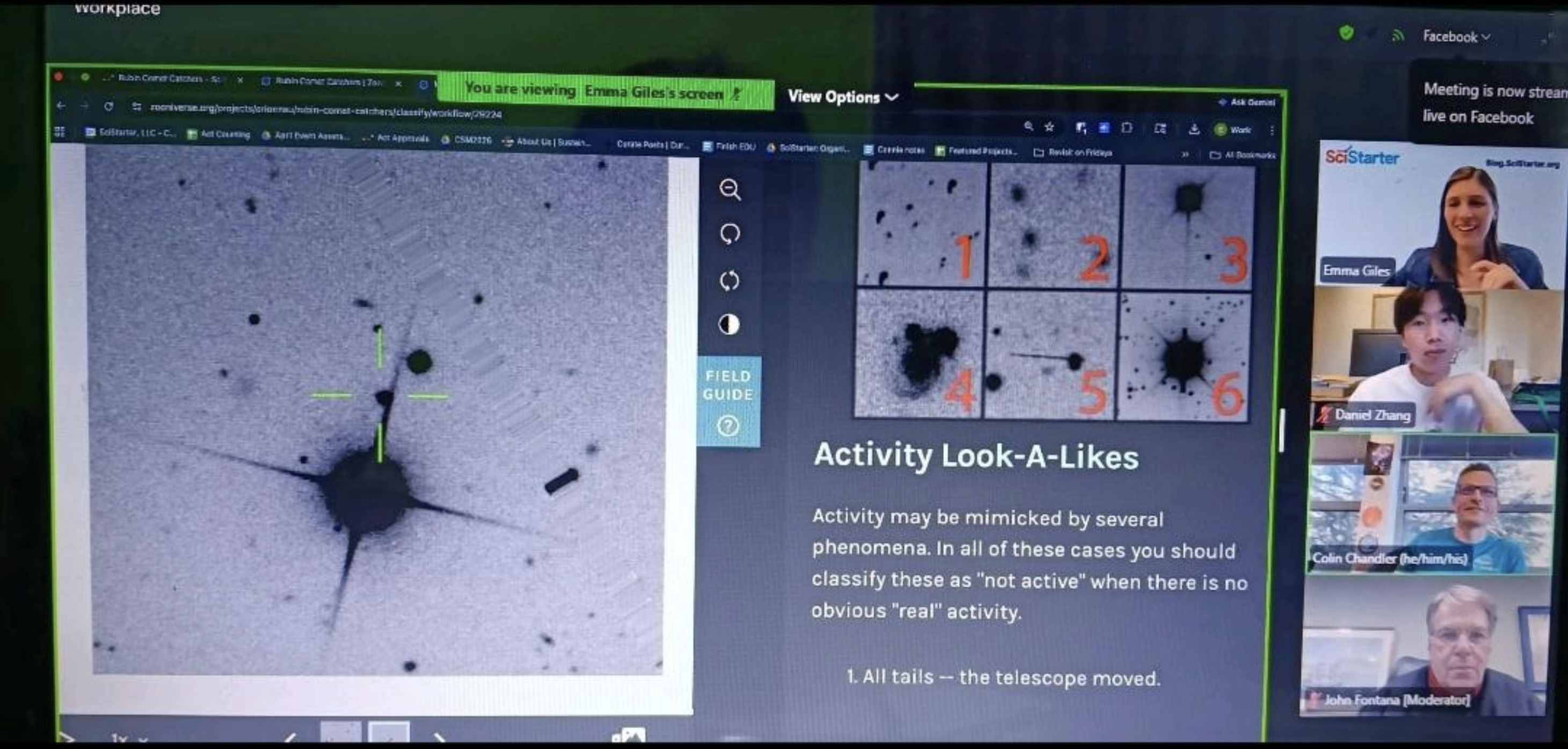
The webinar was tactfully hosted by Emma Giles with the team of expert scientists headed by Dr. Colin Chandler who explained each classification done live in the Rubin Comets Catchers project hosted on Zooniverse.
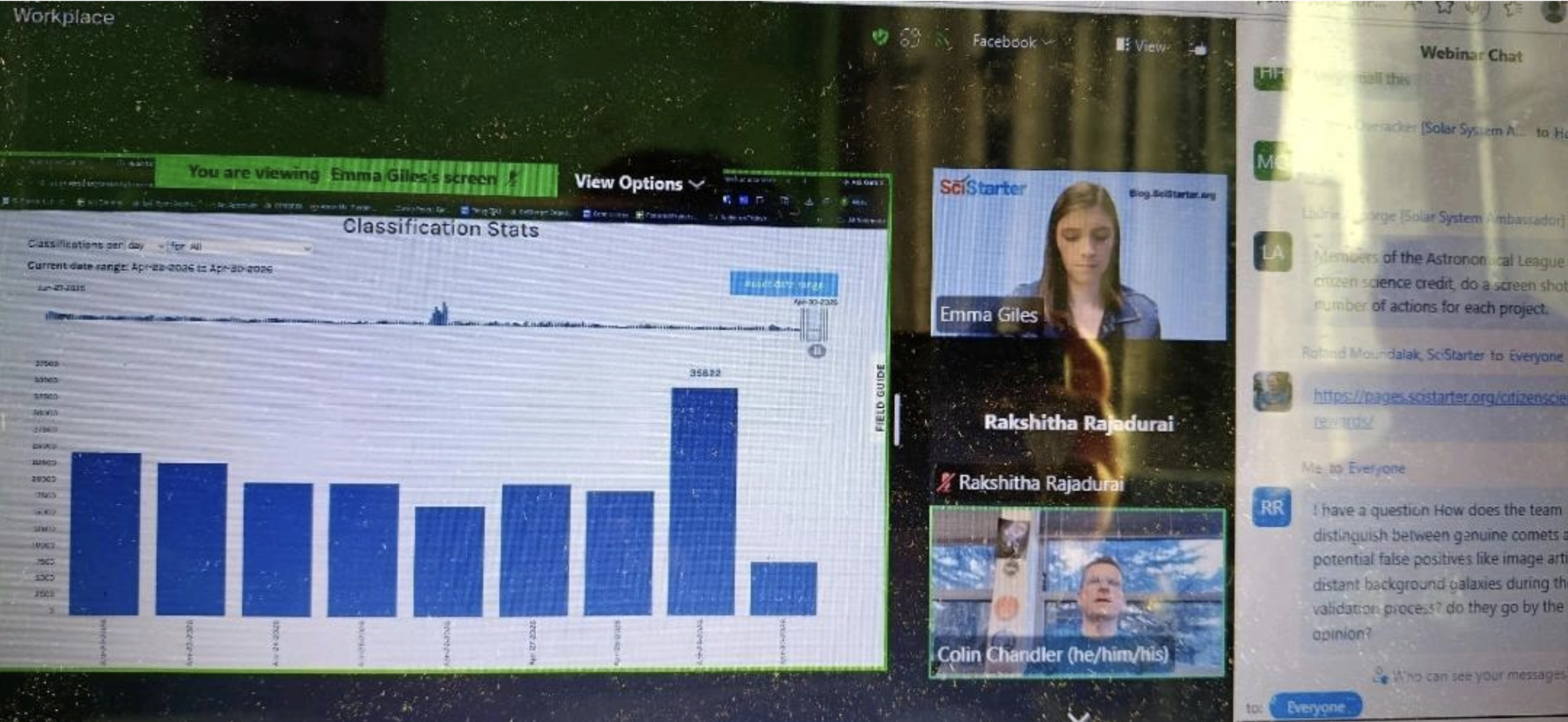
Rubin Comet Catchers is a project that uses data from the Vera C. Rubin Observatory, which is poised to discover an unprecedented number of comets, active asteroids, and other comet-like bodies! The closing event of Citizen Science Science, “Comets, Clues and Our Cosmic Story,” powered by NASA and SciStarter, analyzed over 44,000 images to locate active comets and asteroids with the help of its volunteer base.
44,000 classifications is double the participation expected by the project in a single day!
You can find the recording and read more about the outcomes on the SciStarter blog here: https://pages.scistarter.org/aosc2026-comets-and-clues.
What Actually Happened in the Final Event on April 29th
The virtual webinar kicked off on the night of April 29th, which, for my time zone, was 4:00 AM on April 30th!!
A team helped moderate the chat and conversation, including researchers on the project including Daniel Zhang and Max Frissel, Solar System Ambassadors including John Fontana, while Emma Giles from the SciStarter team and Dr. Colin Chandler, the project founder, guided us through the classifications. They helped us understand the tricky difference between comets, asteroids, and even how to identify the famous active asteroid “Gault,”in the project.
The experts were incredibly patient and friendly, answering every single question carefully and thoroughly. They made my first experience participating in the project and meeting the science team a truly rewarding experience. They walked us through the common misinterpretations made by volunteers and reminded us that we don’t need fancy telescopes, our smart phones are more than enough to contribute. They made science feel more approachable rather than intimidating.
Even if you couldn’t make it to the live event, the project is ready for you to jump in right now. Don’t worry readers, here is the link to the webinar recording and information so you don’t miss out: https://pages.scistarter.org/aosc2026-comets-and-clues.
My Participation in Citizen Science Month
The month of April was an opportunity to be a part of a national push to celebrate America’s 250th birthday through public service in the field of science . Seeing a golden opportunity to unite their communities, passionate SciStarter Ambassadors and organizers rallied together to host vibrant events and gatherings, resulting in more than four million Acts of Science.
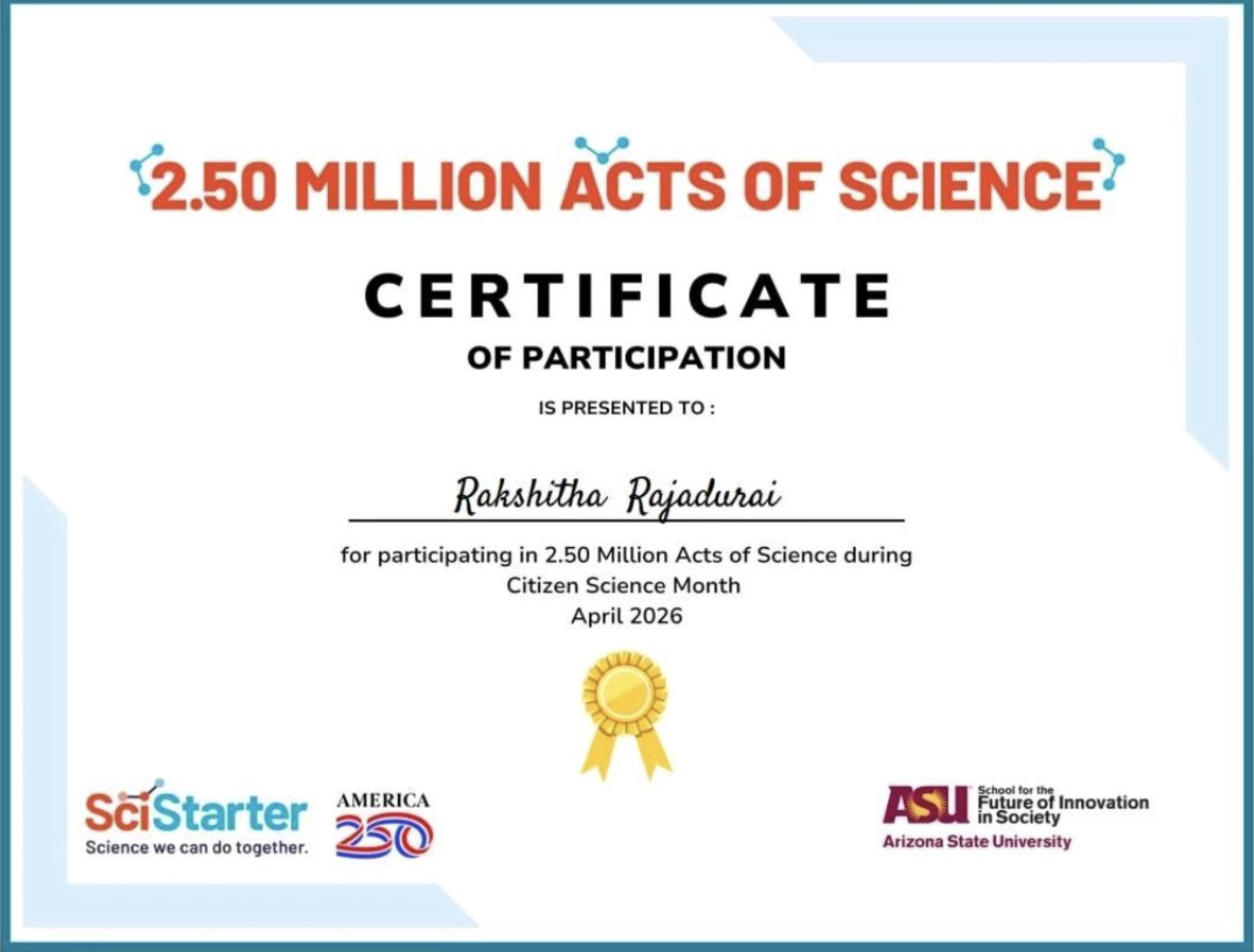
This incredible milestone shows how we can all link arms to do something great for our country and help SciStarter grow, which brings me to the very reason why I couldn’t wait to share this story with all of you dear readers!!
How can you get started?
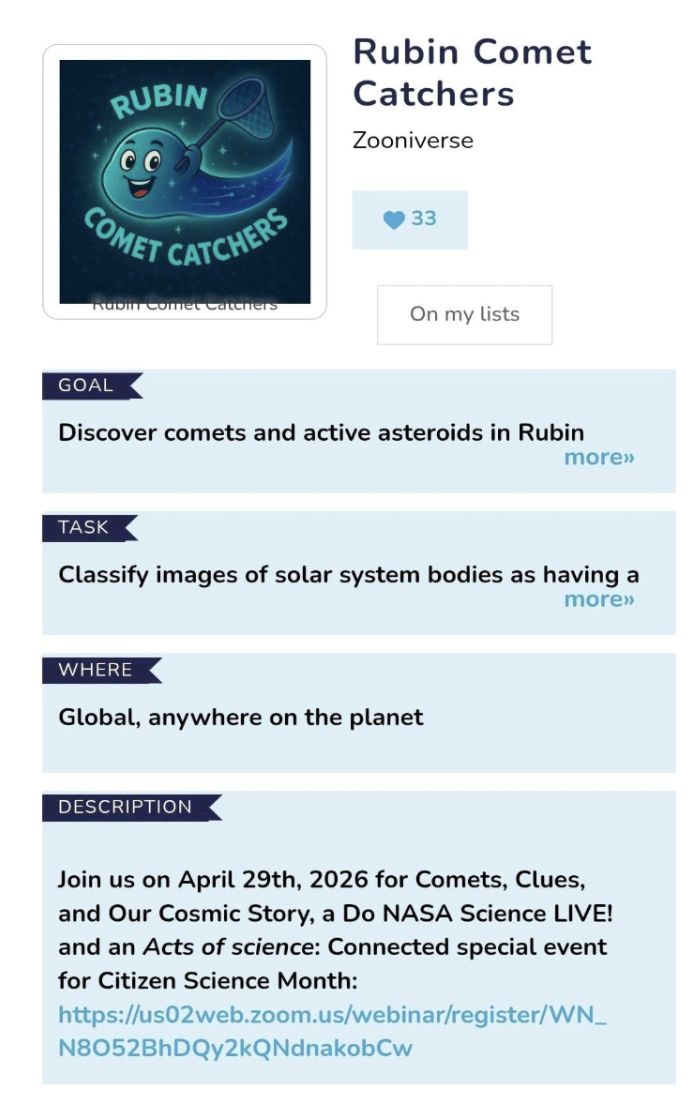
If you are interested in Astronomy, comets, or any other celestial bodies, the Rubin Comet Catchers team is always looking for more volunteers to help classify the data. Join the project here!
Looking for more?
There is a wide range of projects across all genres of science where you can contribute. Even easy ways to turn a daily walk into a contribution to global research.
Visit SciStarter.org/NASA for more NASA-supported projects or visit SciStarter.org/finder to find all kinds of projects that interest you.
Meet the Author
Rakshitha Rajadurai
High school student and researcher
Find me on LinkedIn
