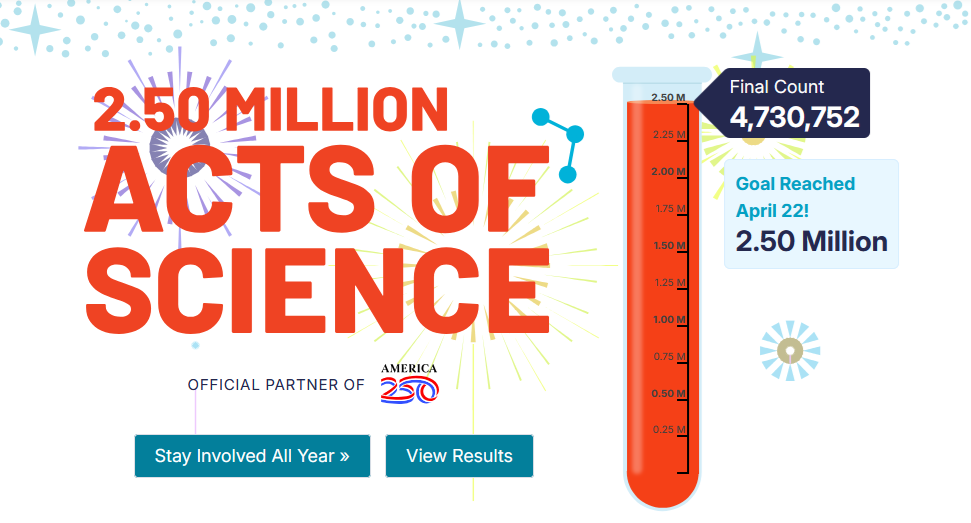
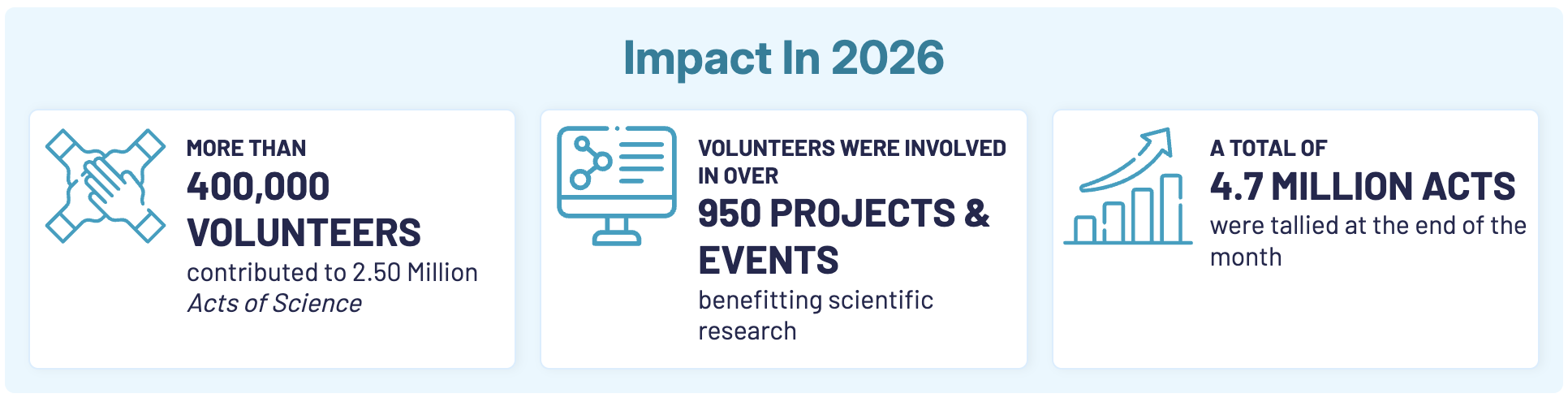
We set out to reach 2.50 Million Acts of Science during Citizen Science Month in April, a number chosen to celebrate the 250th birthday of the United States this year. By Earth Day (April 22) participants had already passed it. By April 30, 450,918 volunteers from 140 countries had contributed 4,730,752 Acts of Science, supporting more than 950 research projects and events.
An Act of Science is a single contribution to real research: a weather observation logged, an animal identified in a trail-camera image, a historical document transcribed. Together they make science possible at scales no research team could reach alone.
To every volunteer, every SciStarter Ambassador, every member of the Citizen and Community Science Library Network, and every partner who made this happen: thank you! See the participants’ Wall of Fame and learn more about the Acts and Citizen Science Month here.
What we did differently in 2026
This year we introduced Acts of Science: Connected, a new event format built in collaboration with the SciStarter Steering Committee of the Citizen and Community Science Library Network.
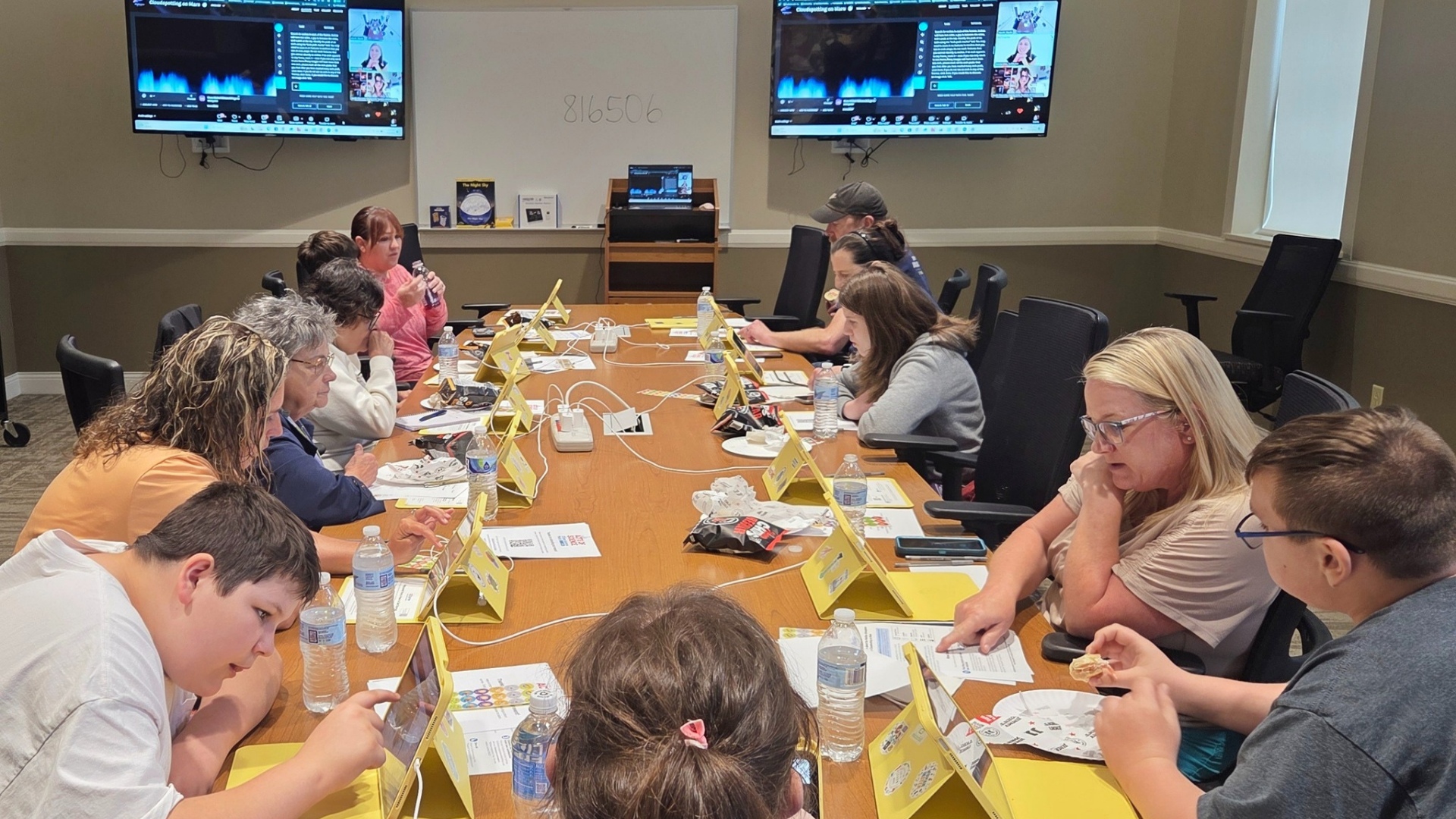
Connected events are livestreamed Zoom programs built around a single idea: instead of lecturing about citizen science, we do it together, in real time! A participant in a small-town library contributes alongside someone joining from another city or another continent. Local facilitators provide the room while the livestream creates a shared international moment.
About one-third of the 481 events held worldwide in April were part of the Connected series, and 34% of all events took place in libraries which are trusted, accessible hubs for community learning.
To make hosting possible for anyone, we replaced “build it yourself” resources with a complete toolkit: print materials, event guides, videos, promotional assets, and a follow-along blog so latecomers could jump in without losing the thread. New facilitators got started faster. Experienced organizers went deeper. And participants saw their impact land in real time.
The SciStarter Ambassadors and the NASA Solar System Ambassadors showed up as moderators, guides, and panelists, turning each event into a guided experience.
The results spoke for themselves.
Five Connected events, five research moments

April 2 — 10× the data in a single day: mapping clouds on Mars
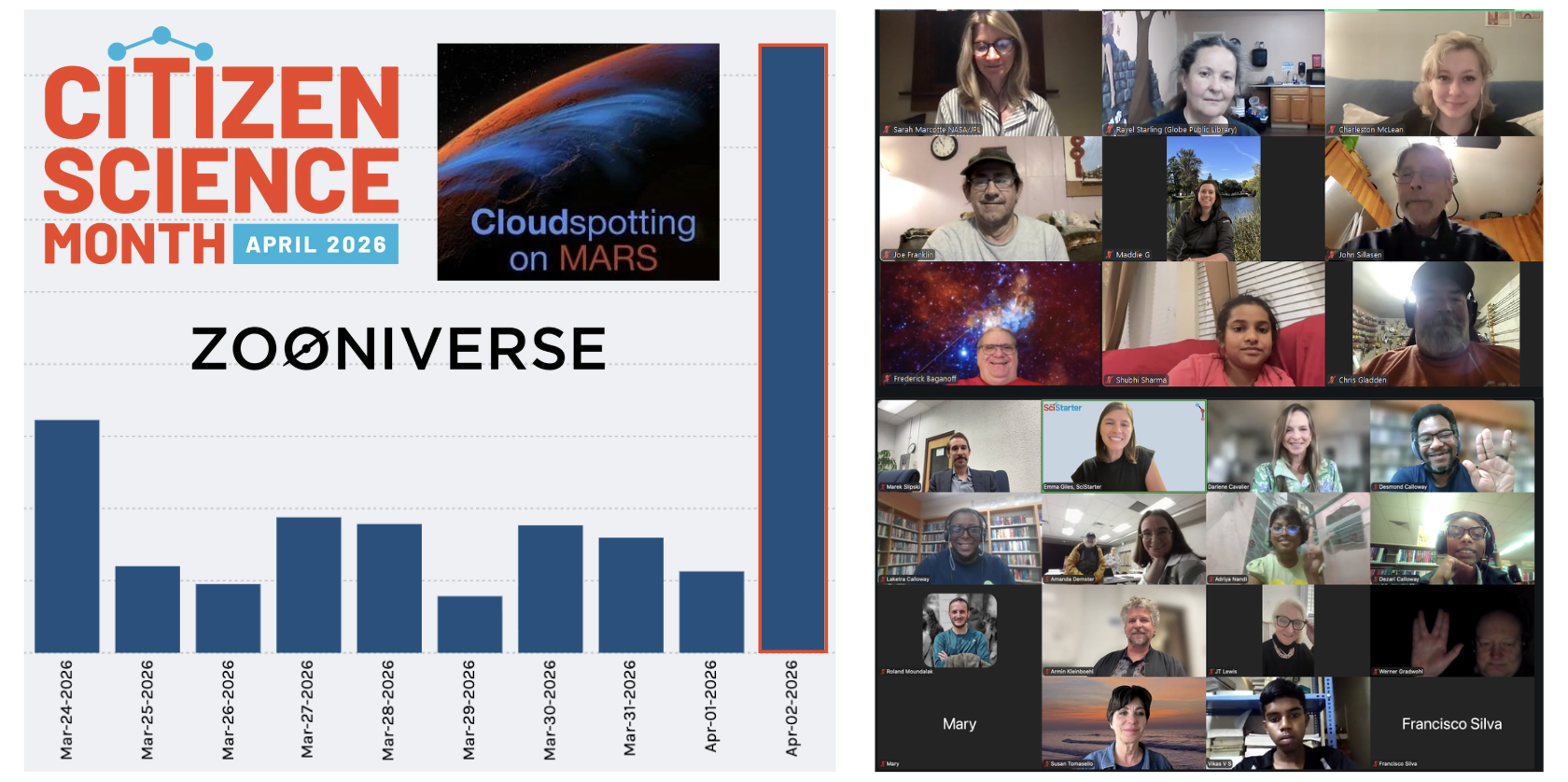
On April 2, participants gathered for What’s the Weather Like on Mars, contributing to a shared, real-time effort that generated more than 11,000 classifications for the Zooniverse project, Cloudspotting on Mars, in a single day—over ten times the project’s typical daily average.
As the event unfolded, the impact was clear:
“We just crossed the threshold of 20,000 registered participants for this project! … thank you all so much for getting us past that threshold and for working with us on this analysis.”
Each classification contributes to a deeper understanding of the Martian atmosphere, helping scientists improve climate models and move toward a future where astronauts could access reliable forecasts—like dust storm predictions—before stepping outside. As project scientist Armin Kleinböhl of the Jet Propulsion Laboratory explains, this work strengthens both the accuracy and predictive power of those models.
April 10 — 200+ pages transcribed for the Freedmen’s Bureau archive
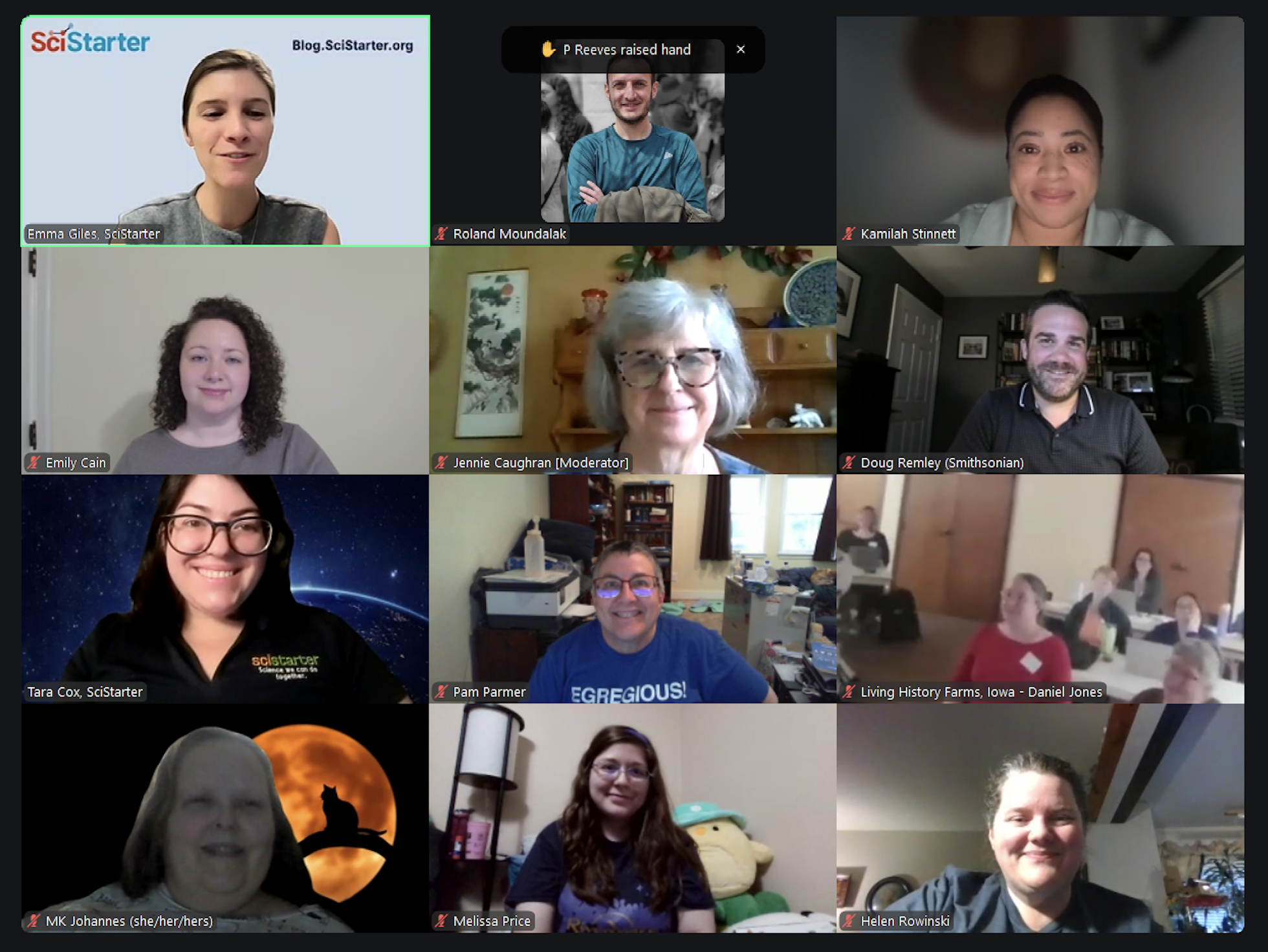
On April 10, participants turned their attention to history in the Voices of Freedom: Transcribing Post-Civil War Handwritten Records working with the Smithsonian Transcription Center and National Museum of African American History and Culture to transcribe Freedmen’s Bureau Records.
Together, volunteers completed more than 200 pages—totaling 4,872 Acts of Science.
This was a deeply collaborative session, with participants actively using the chat to interpret cursive and antiquated handwriting—turning individual effort into a shared problem-solving experience.
“As a descendant of enslaved people, being part of this project feels deeply personal. I value the chance to help bring forward records that hold pieces of lives, names, struggles, and truths that too often were buried, overlooked, or made hard to access. What I like most is that this work helps make that history more visible, searchable, and honest for descendants, researchers, and the public.”
Lorraine, new “volunpeer” for the Smithsonian Transcription Center
April 16 — 42 hours of lab work, accelerated in a single evening
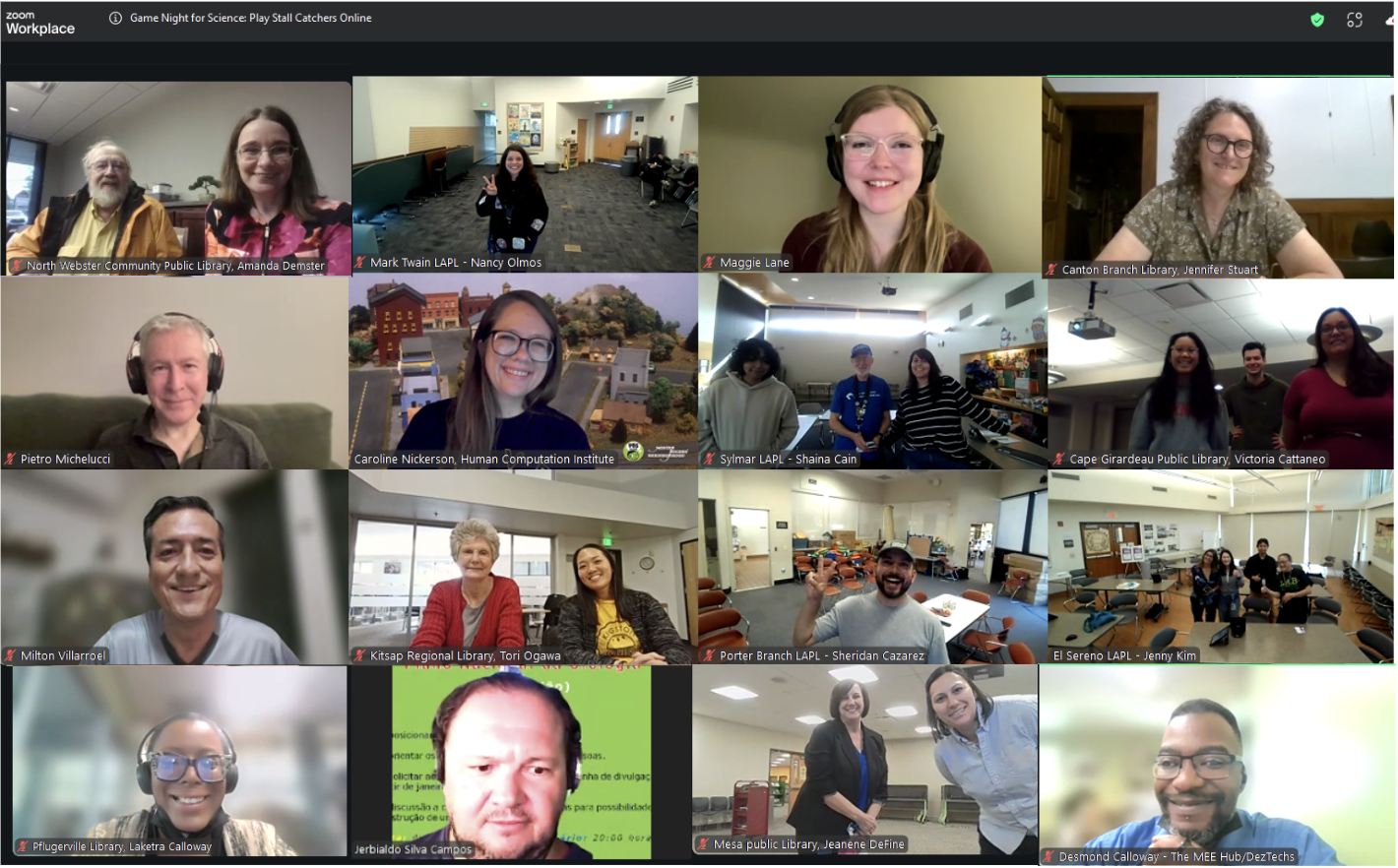
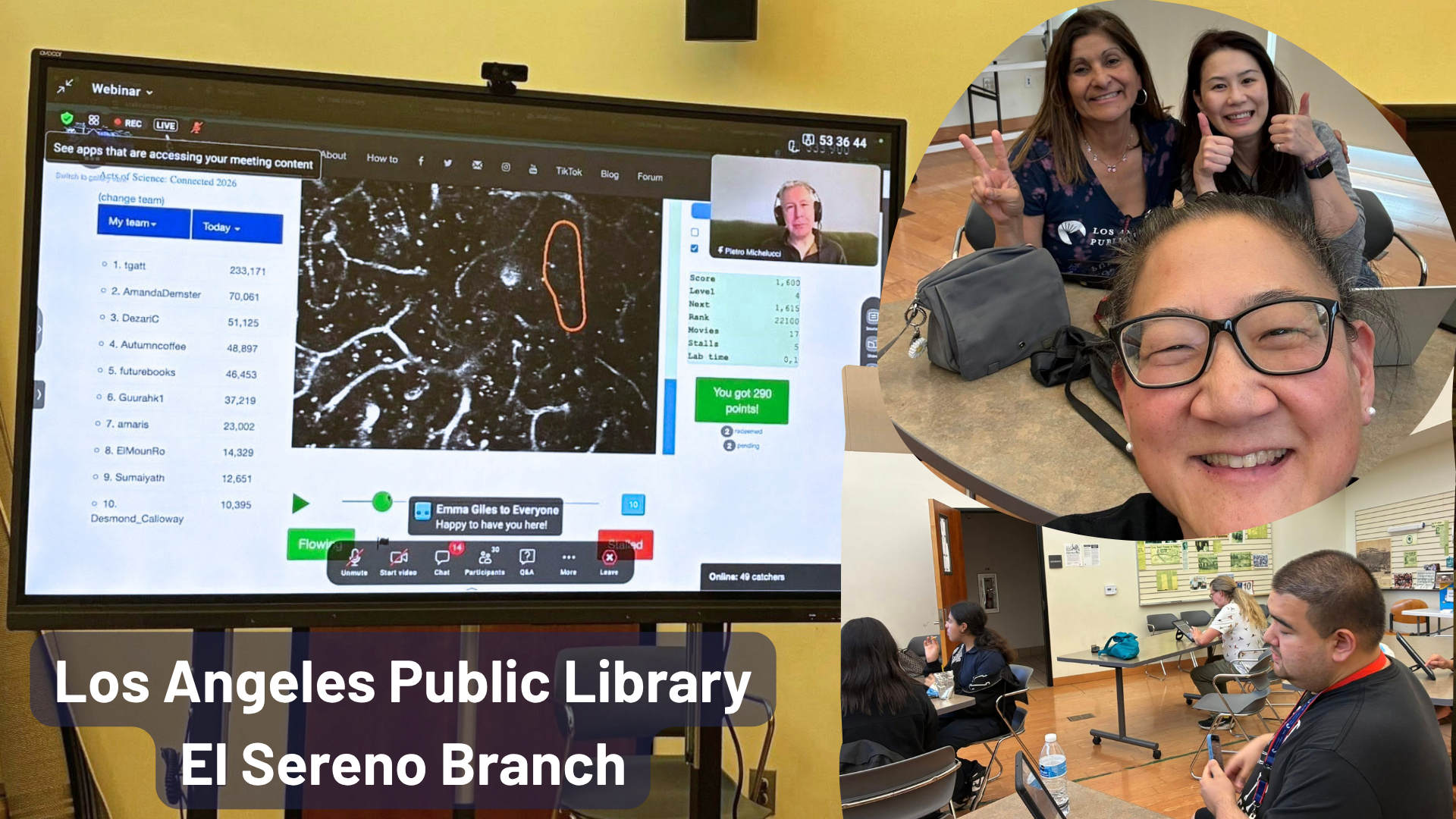
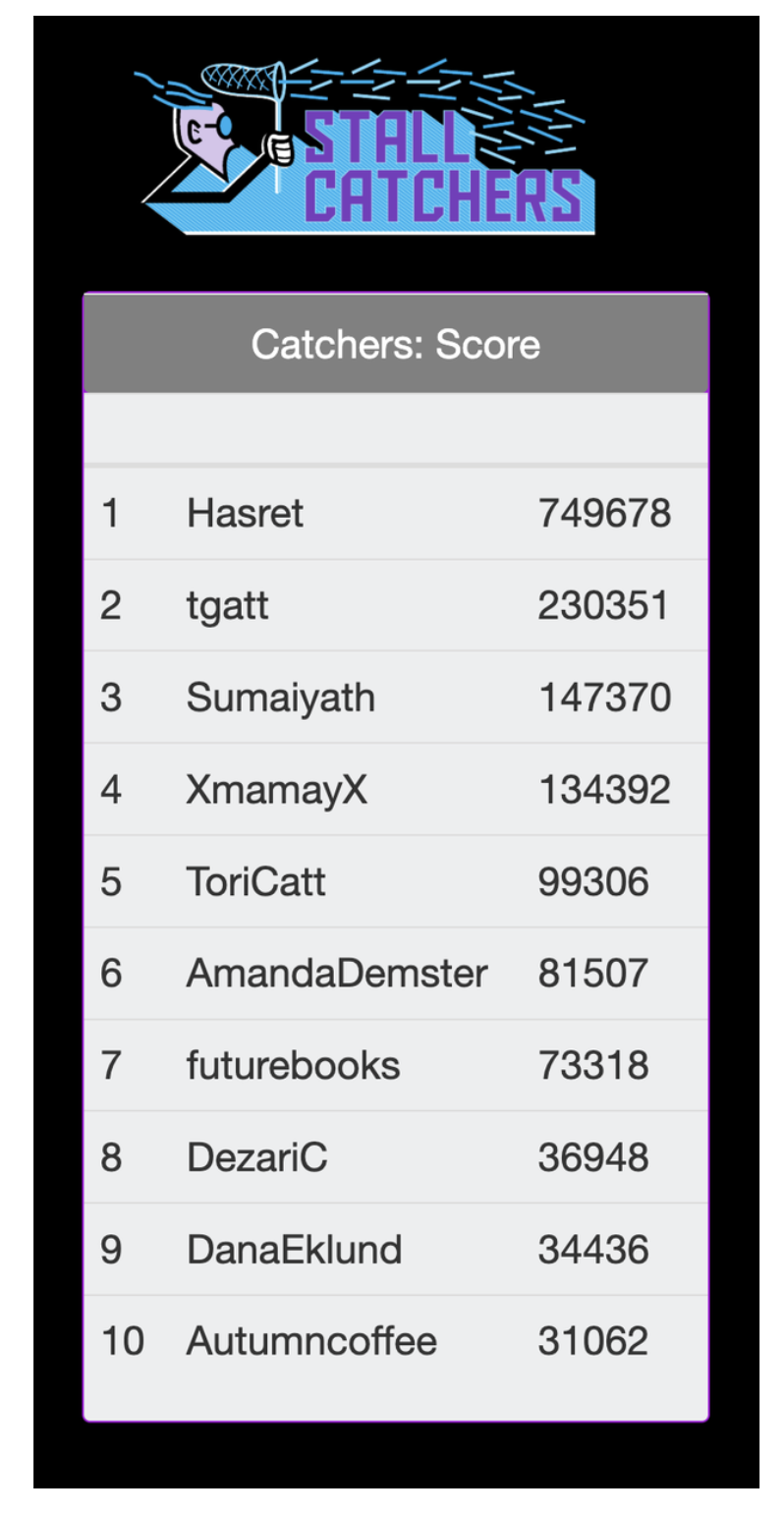
On April 16, participants working on Stall Catchers during Game Night For Science annotated more than 16,500 blood vessels in a single day, accelerating Alzheimer’s disease research and saving scientists an estimated 42 hours of lab work. Participants described the experience as both engaging and rewarding:
“The Stall Catcher [website] is actually very insightful. It’s actually fun to try to compete to catch all of the stalls. It’s like catching Pokémon—got to catch ’em all!”
SciStarter Ambassador Dezari shared:
“I enjoy it! While some are hard to do, it’s fun to learn more about how the vessels in the brain flow!”
April 22 — Earth Day: triple the usual pace of wildlife discovery
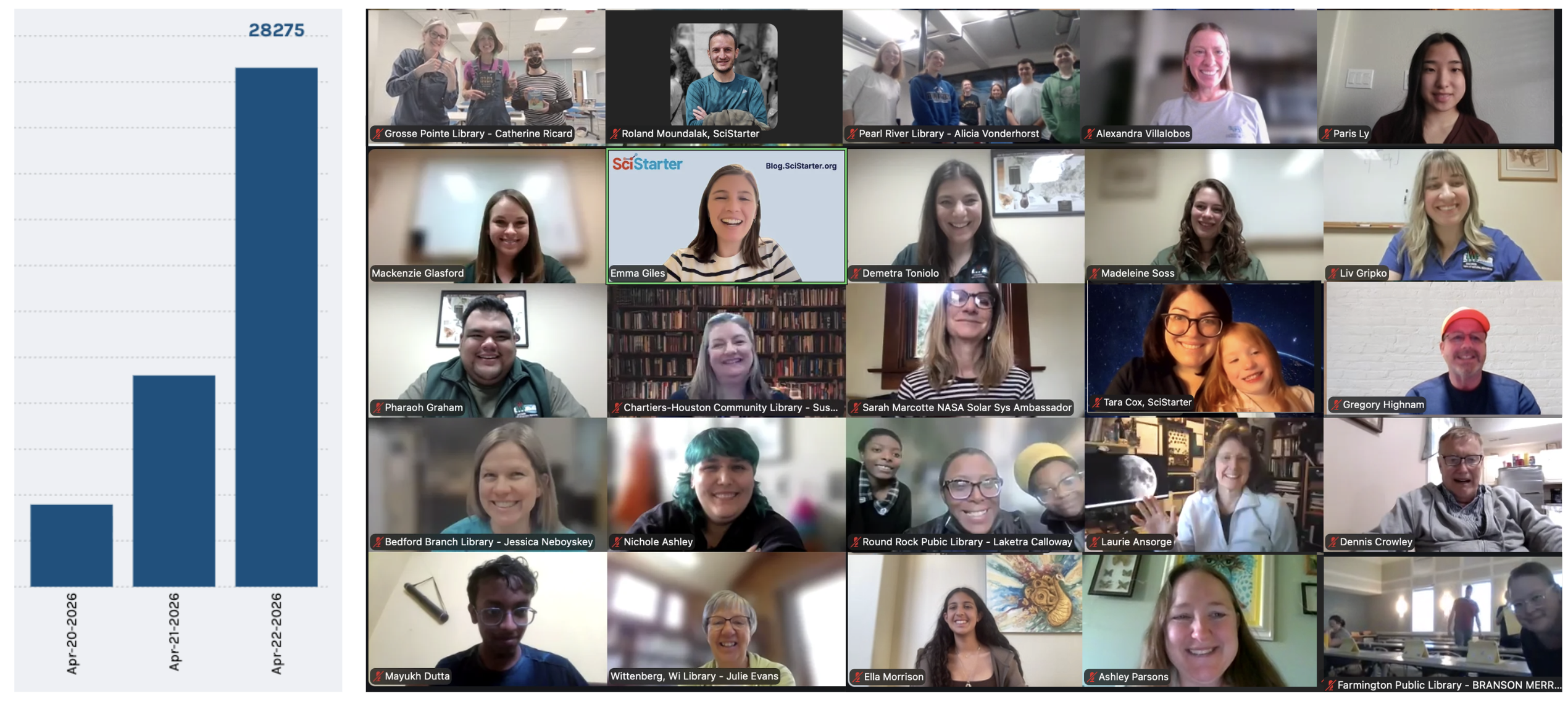
On April 22, during SciStarter’s Earth Day Animal Spot-a-thon, participants classified more than 28,900 trail camera images for Snapshot Wisconsin—roughly TRIPLE the project’s usual pace.
“Every classification is important… It helps us process this data way quicker than just our team could do on our own.”
Mackenzie Glasford emphasized that these classifications are transformed into usable data that directly support wildlife management decisions, including tracking and protecting rare species.
Participants felt the momentum, too. Julie from the Wittenberg Library commented:
“This is addicting, I have often spent way too many hours saying, one more identification!”
April 29 — 44,000 images, double the daily average: hunting comets
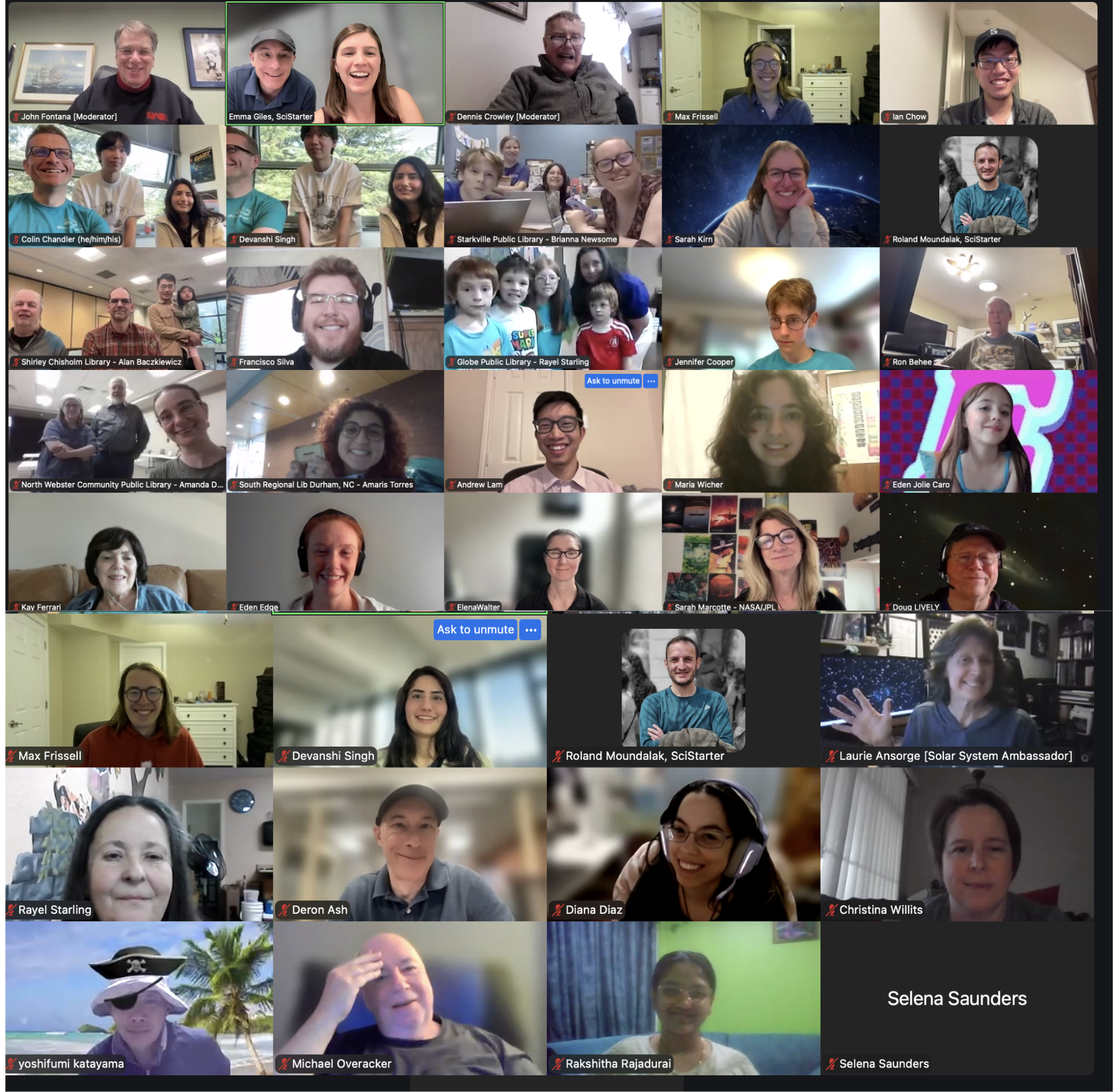
The series concluded on April 29 with a final “Connected” event, Comets, Clues and Our Cosmic Story, bringing participants together for one more day to contribute in real time.
Thanks to hundreds of volunteers on April 29, 44,000 images were classified to locate active comets, doubling the usual daily effort! What a powerful way to close out Citizen Science Month during our final Acts of Science: Connected event with the Rubin Comet Catchers team.
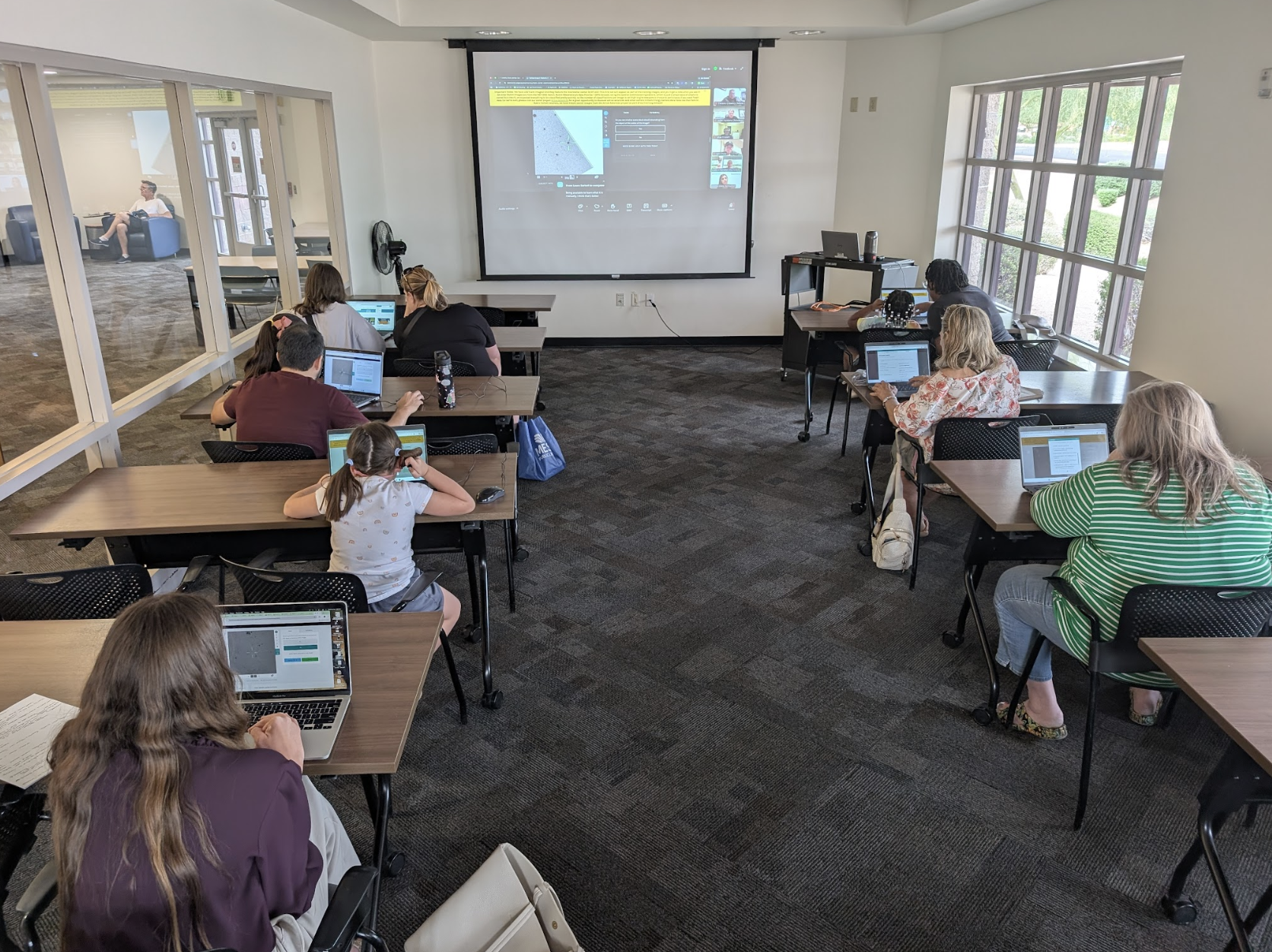
Laurie, a Solar System Ambassador, reflected on the experience, sharing that participating together gave her more confidence, a sentiment shared with many in the zoom chat.
What we learned
The “Connected” model works and shows what’s next. New facilitators told us the toolkit lowered the barrier to hosting. Participants told us they valued seeing their contributions add up in real time. Project teams told us they benefited from being part of a coordinated effort.
There’s still a perception gap to close. Many participants arrived at in-person events expecting a lecture. Some streaming hosts didn’t expect the level of hands-on engagement. After years of being positioned as consumers of science, the idea that anyone can contribute to real research is still surprising. Our job is not only to create pathways for participation, it’s to clearly signal what participation looks like.
One experience leads to another. Among April-active SciStarter participants, 41% joined more than one project or event, a strong sign that the right entry point opens a longer path.
Partnerships amplified the work. As an official partner of America250, and through our collaboration with Idealist.org, we connected citizen science to a broader story of public participation. Every volunteer who logged an Act of Science between April 1–30 received a free 12-month digital subscription to New Scientist, no strings attached. And our shared social campaigns using #CitizenScienceMonth, #ActsofScience, and #SciStarter reached more than 13 million people worldwide!
Follow us!
Facebook | Instagram | TikTok | LinkedIn | YouTube | Bluesky
Looking Ahead
A new Acts of Science goal is on the way… stay tuned!
One thing is already certain: Acts of Science: Connected is here to stay. We’ll keep hosting hands-on, contribution-driven events with libraries and museums throughout the year, building toward Citizen Science Month 2027.
Two priorities will shape that year:
- Expanding the SciStarter Ambassador program, so thousands more participants and facilitators can introduce citizen science in their communities and help shift the narrative: scientists don’t just welcome public participation; they rely on it.
- Growing the Citizen and Community Science Library Network, with particular focus on rural and under-resourced libraries.
We’ll also keep refining the turnkey resources that facilitators told us made the difference; the materials that turn “interesting idea” into “event on the calendar.”
You don’t have to wait until spring 2027. Find a project that matters to you and start today.
Become a SciStarter Ambassador
Help lead and inspire citizen science in your community
Join the Library Network
Bring citizen science to your library and local audiences
Take Free Trainings
Build skills to confidently participate and facilitate
