<< Return to 12 Months of Citizen Science Programming
February: Improve the Path with Project Sidewalk
Activity Type
Computer-based mapping activity
Topic
Accessibility, community planning, pedestrian infrastructure
Audience
Teens, Adults, Families, Intergenerational groups
Location
Indoors
Materials
Each participant needs an internet-connected tablet or computer
Low Tech Options
Encourage participants to bring their own devices. This project is 100% online.
Program Description
Help make communities more accessible with Project Sidewalk, an online citizen science project that invites participants to virtually explore city streets and identify accessibility features and challenges.
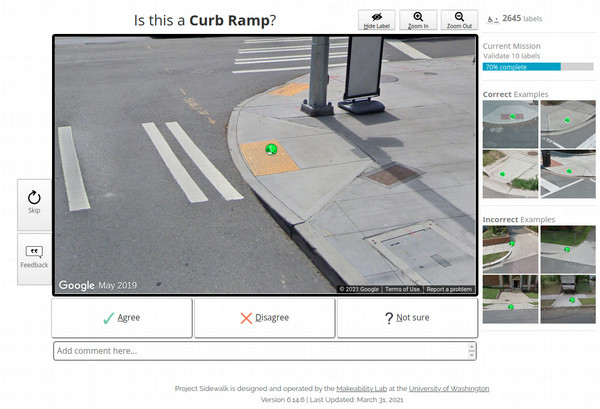
Using street-level imagery, participants look for features such as curb ramps as well as barriers like missing sidewalks, obstacles, and damaged surfaces. Their observations contribute to an open dataset that can help researchers, communities, and city governments better understand pedestrian accessibility and identify areas that may need improvements.
As the facilitator, you’ll introduce the importance of accessible pathways, help participants get started with Project Sidewalk, and give them plenty of time to virtually explore and contribute together.
Prep & Flow based on a 1 hour event
Prep:
5 min – Review the Project Sidewalk project page and participation instructions on SciStarter.
10 min – Try Project Sidewalk yourself. Complete the tutorial and practice identifying and rating accessibility features so you’re familiar with the participant experience.
5 min – Room set up (this will vary based on the capacity to share your Project Sidewalk screen on a projector).
Event Flow:
5-10 min – Set the Stage: Ask participants to think about what makes a sidewalk accessible. What features might make it easier or harder for someone using a wheelchair, walker, stroller, or other mobility aid to get around?
15 min – Get Started: Introduce Project Sidewalk and walk participants through the tutorial and labeling process.
30 min – Improve the Path: Let participants virtually explore and label pedestrian pathways. Encourage them to share interesting examples or accessibility challenges they notice as they work.
5 min – Reflect and Wrap Up: Discuss what participants noticed. Were there accessibility challenges they hadn’t considered before? Share how they can continue contributing to Project Sidewalk from home.
*Incentive suggestions: Recognize the participant who completes the most missions or labels the most features, offer a free used book from the Friends of the Library bookstore, provide SciStarter stickers or buttons (see SciStarter designs), or offer another small prize.
No prior experience is needed. All you need is a web browser, an internet connection, and an eye for the details that can make getting around a community easier or harder.
Recommended Project
Project Sidewalk
Virtually explore cities and help identify features and problems that affect pedestrian accessibility.

Anytime

Indoors

Accessibility, Transportation, Community Planning
Program Resources
SciStarter LIVE: Project Sidewalk Power Hour
Watch this recorded SciStarter LIVE to see Project Sidewalk in action and learn how volunteers can contribute together.
Complimentary Projects & Resources
Keep the community-service theme going! Explore more ways patrons can use citizen science to make a difference in their communities.

Litter Journal
Clean up litter and document what you find to help researchers better understand where litter comes from and how communities can prevent it.
Anytime
Outdoors
Ecology & Environment, Nature & Outdoors

AirCasting
Measure air quality in your community and contribute data that can help people better understand local environmental conditions.
Anytime
Outdoors
Ecology & Environment, Nature & Outdoors