<< Return to 12 Months of Citizen Science Programming

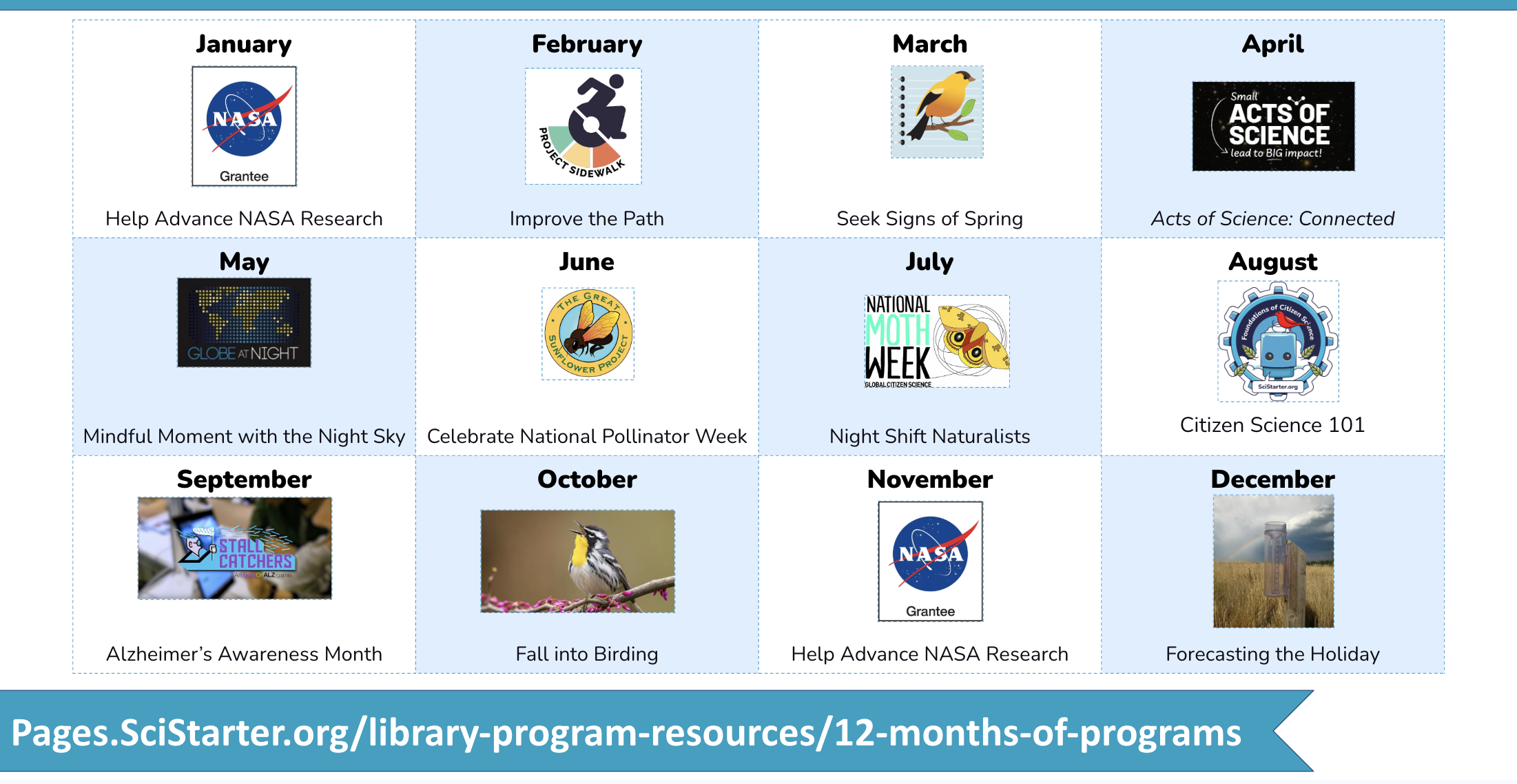
May: Take a Mindful Moment with the Night Sky
Activity Type
Outdoor nighttime observation activity
Topic
Astronomy, light pollution, night sky
Audience
Teens, Adults, Families, Intergenerational groups
Location
Outdoors, at night
Materials
Internet-connected smartphone or tablet, optional red flashlight, and a clear view of the night sky
Low Tech Options
Participants can use a printed Globe at Night data sheet to record observations during the event and submit their data online afterward
Program Description
Slow down, look up, and help scientists understand light pollution in your community.
Globe at Night is an international citizen science project that invites people around the world to measure the brightness of the night sky. By observing a featured constellation and comparing what you see to a series of star charts, you can document how visible the stars are from your location.
Host a nighttime gathering outside your library or at a nearby park where participants can spend a few quiet moments letting their eyes adjust to the darkness, explore the night sky, and contribute their observations to Globe at Night.
The data collected by participants around the world help scientists track light pollution and better understand how our night skies are changing.
Prep & Flow based on a 1 hour event
Prep:
5 min – Review the Globe at Night project page and Event Recipe Card.
10 min – Familiarize yourself with the Globe at Night reporting process and identify the constellation participants will observe.
10 min – Choose an outdoor observation location with a clear view of the night sky. Check the Globe at Night observing dates and plan your event for a night when the featured constellation will be visible.
10 min – Print data sheets if you plan to offer a low-tech participation option.
Event Flow:
5-10 min – Set the Stage: Welcome participants and introduce Globe at Night. Talk briefly about light pollution and ask participants what they notice about the night sky where they live.
10 min – Adjust to the Dark: Head outside and give everyone time to let their eyes adjust to the darkness. Encourage participants to put away bright screens and take a quiet moment to notice what they can see and hear around them.
10 min – Explore the Night Sky: Find the featured constellation together and help participants become familiar with the Globe at Night star charts.
15-20 min – Measure the Night: Participants compare the stars they can see with the Globe at Night charts and record their observations.
5-10 min – Share and Wrap Up: Compare observations and discuss what participants noticed. Show them how their observations contribute to a global picture of light pollution and encourage them to make additional observations from other locations.
Recommended Project
Globe at Night
Look up at the night sky and help scientists measure light pollution around the world. Observe a featured constellation, compare what you see with Globe at Night star charts, and submit your observation to contribute to a global map of night sky brightness.

Monthly observation windows

Outdoors, at night

Astronomy, Light Pollution, Environment
Program Resources
How to Get Started with Globe at Night
Start your event with this short video introducing Globe at Night and explaining how participants contribute to research.
Complimentary Projects & Resources
Keep exploring after dark! For more nighttime citizen science ideas, check out our July program plans featuring Night Shift Naturalists and moth observations during National Moth Week.